William Howard Taft Quotes
The intoxication of power rapidly sobers off in the knowledge of its restrictions and under the prompt reminder of an ever-present and not always considerate press, as well as the kindly suggestions that not infrequently come from Congress.
William Howard Taft, 1857-1930, 27th President of the United States (Republican, OH), Chief Justice of the U. S. Supreme Court, Speech to the Lotus Club, November 16, 1912
Sourced by: Eigen's Political and Historical Quotations

Trump refused to divest himself from his hotels and golf courses and received money from States and Foreign countries for their officials who paid the very high rates compared to other hotels and even golf courses trying to gain access and curry favor with the U. S. President. Once Tump became President, he raised the rates for his Hotel on Pennsuylvania Avenue not far from the White House from $250 a night to $500 a night. He also similarly increased the prices of a number of his other properties.


While this may have been true in some European nations, many disagree completely with this assertion for America. They point to the thousands of laws passed by Congress to cut back or diminish the power that they had earlier given the agency. These counter-examples to Hayek’s view are particularly evident after most wars. What often does happen is that Congress votes a temporary power to a government agency, and when the temporary power time is coming to an end, many citizens and officials are so happy with the result of granting the power, that the power is then granted permanently, sometimes to the distress of some legislators who voted for the power with the understanding that it would be temporary. However, Congress may, and often does, change its collective mind. Coercion to Hayek includes for example, taxation if there are criminal penalties for failure to pay the tax or regulation where a government agency may require or prohibit certain behavior of a business or individual and most people would agree that even in a democracy there are coercive aspects of much government activity.


Bush and his aids claimed that the President’s important schedule could only accommodate that time. However, he spent hours at a rodeo, played golf, and spent many hours at fundraising dinners.


President Andrew Johnson had been impeached by the House of Representatives and was being tried in by the Senate. A majority of the Senators voted for conviction but the vote was 1 short of the two-thirds that were needed. Johnson remained in office. These were two of the charges against Johnson. A Century later Presidents commonly did both of these. George W. Bush made reappointment of Senate rejected nominees into an art form but after the Johnson trial, these were never to be considered reasons for impeachment again.


This was written when Wilson was a Professor. When he became President, his view of the importance of Congress and Congressional oversight diminished.


Obama was a President who believed deeply in the concepts of checks and balances and separation of powers. He did not punish members of Congress who opposed him by closing federal installations in their state of district, not giving government contracts to companies in his district and in the case of member of his own party who were “recalcitrant” supporting opponent in primary elections and failing to support in general elections. Presidents Nixon and Johnson used these techniques particularly effectively. As a result they pushed their legislative programs through Congress very effectively. All other modern Presidents have done this to one degree or another, but Obama did not. He believed that pressure on member of Congress should be limited to persuasion and public debate moving public opinion. Many seasoned politicians and political observers however thought that this was Obama’s biggest weakness as a President. Lyndon Johnson did not have to actually punish many member of Congress, as his willingness to do so was well known and thus few opposed him when he called or met with them and “gave them the treatment.” But Congress knew that Obama had taken punishment and retaliation off the table, and many opposed him including member of his own party.


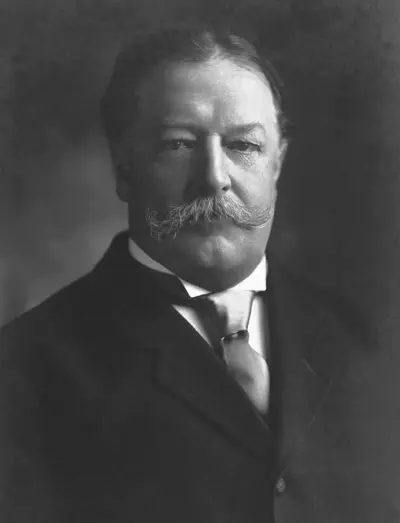
William Howard Taft was the 27th president of the United States (1909–1913) and the tenth Chief Justice of the United States (1921–1930), the only person to have held both offices. Taft was elected president in 1908, the chosen successor of Theodore Roosevelt, but was defeated for reelection by Woodrow Wilson in 1912 after Roosevelt split the Republican vote by running as a third-party candidate. In 1921, President Warren G. Harding appointed Taft to be chief justice, a position he held until a month before his death.
