Russ Feingold Quotes
When the President of the United States breaks the law he must be held accountable. That is why I am introducing today a resolution to censure George W. Bush…. At the very heart of our constitution is the assumption that some members of the government will do wrong, and when they do, others in the government must do right…. The President has broken the law. Congress must act…. Our job is not to stand up and cheer when the President breaks the law.
Russ Feingold, U. S. Senator (Democrat, WI), Speech introducing a resolution to censure President George W. Bush, Senate Debate, March 13, 2006
Sourced by: Eigen's Political and Historical Quotations


Trump refused to divest himself from his hotels and golf courses and received money from States and Foreign countries for their officials who paid the very high rates compared to other hotels and even golf courses trying to gain access and curry favor with the U. S. President. Once Tump became President, he raised the rates for his Hotel on Pennsuylvania Avenue not far from the White House from $250 a night to $500 a night. He also similarly increased the prices of a number of his other properties.

In England, the King was above the law. However, impeachment was a tool that could be used against his favorite ministers. In debating the United State Constitution one of the first questions to be determined was whether impeachment could be a tool used against the President or like, England, only the other government officials. Franklin urged the President be included. See also Mason: {584246}.

President George W. Bush, during the War on Terror, asserted the authority to contravene laws passed by Congress and signed by a previous president. He further, argued that he did not have to inform Congress when he ordered steps that broke the existing laws. His position was based on his claim that there were inherent Presidential powers in wartime granted by the Constitution and the Congress could not override the Constitution.


The convention turned down the constitution and would not ratify it until the Bill of Rights was passed later. By modern standards, Presidents in modern times have withheld much information from the Congress and in some cases such as the George W. Bush administrations, the President and his cabinet frequently lied to the Senate, the House, and the American people with no effort made to impeach. Based on the original intent of the Americans ratifying the Constitution, the Executive Branch may not keep anything material to the security of the country secret from Congress. But the center of both parties reject this regardless of what the original intent was.


The debate was about the unlimited pardon power of the President. Madison argued that the check was the impeachment power. However, Presidents had tended to make large numbers of pardons just before they leave office so the impeachment power works only as a check for the beginning and middle part of their term.


Senator Church was the chairman of the committee. It’s reports (14 in all) are the most extensive documentation of U. S. intelligence ever compiled.
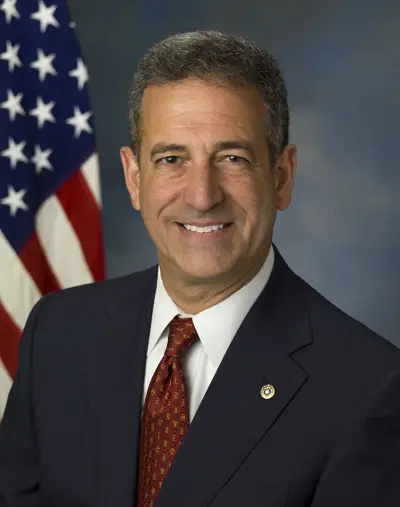
Russell Dana Feingold is an American lawyer and politician who served as a United States Senator from Wisconsin from 1993 to 2011. A member of the Democratic Party, he was its nominee in the 2016 election for the same U.S. Senate seat he had previously occupied. From 1983 to 1993, he was a Wisconsin State Senator representing the 27th District.
