Friedrich Hayek Quotes
Once wide coercive powers are given to governmental agencies for particular purposes, such powers cannot be effectively controlled by democratic assemblies.
While this may have been true in some European nations, many disagree completely with this assertion for America. They point to the thousands of laws passed by Congress to cut back or diminish the power that they had earlier given the agency. These counter-examples to Hayek’s view are particularly evident after most wars. What often does happen is that Congress votes a temporary power to a government agency, and when the temporary power time is coming to an end, many citizens and officials are so happy with the result of granting the power, that the power is then granted permanently, sometimes to the distress of some legislators who voted for the power with the understanding that it would be temporary. However, Congress may, and often does, change its collective mind. Coercion to Hayek includes for example, taxation if there are criminal penalties for failure to pay the tax or regulation where a government agency may require or prohibit certain behavior of a business or individual and most people would agree that even in a democracy there are coercive aspects of much government activity.
Friedrich A. Hayek, 1899-1992, Austrian Economist and Political Philosopher, Nobel Laureate in Economics, The Constitution of Liberty, 1960
Sourced by: Eigen's Political and Historical Quotations


This is the major factor in many nations trying to shift to a democracy from a totalitarian form of government. The winners assume that they can now do anything without regard for the minority rights of opinions.


President George W. Bush, during the War on Terror, asserted the authority to contravene laws passed by Congress and signed by a previous president. He further, argued that he did not have to inform Congress when he ordered steps that broke the existing laws. His position was based on his claim that there were inherent Presidential powers in wartime granted by the Constitution and the Congress could not override the Constitution.


Byrnes later was appointed to the court.
At that point in American History there were some who thought that the Congress was aggregating too much power. At the beginning of the 21st century we bemoaned a weak Congress and worried about an imperial and too powerful an executive while a few thought that the Judicial branch had become too powerful in “legislating from the bench.”

President Andrew Johnson had been impeached by the House of Representatives and was being tried in by the Senate. A majority of the Senators voted for conviction but the vote was 1 short of the two-thirds that were needed. Johnson remained in office. These were two of the charges against Johnson. A Century later Presidents commonly did both of these. George W. Bush made reappointment of Senate rejected nominees into an art form but after the Johnson trial, these were never to be considered reasons for impeachment again.


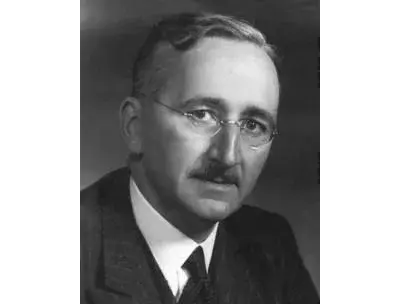
Friedrich August von Hayek CH FBA, often referred to by his initials F. A. Hayek, was an Austrian-British economist and philosopher who is best known for his defence of classical liberalism. Hayek shared the 1974 Nobel Memorial Prize in Economic Sciences with Gunnar Myrdal for his "pioneering work in the theory of money and economic fluctuations and [...] penetrating analysis of the interdependence of economic, social and institutional phenomena". His account of how changing prices communicate information that helps individuals co-ordinate their plans is widely regarded as an important achievement in economics, leading to his Nobel Prize.
