John F. Kennedy Quotes
I can assure you that this flag will be returned to this brigade in a free Havana.
Holding up a Cuban flag:
John F. Kennedy, 1917-1963, 35th President of the United States (Democrat), To members of the Bay of Pigs invasion force, at a reunion, January 1963
Sourced by: Eigen's Political and Historical Quotations


In April of 1962, President Kennedy convened a meeting of top advisors at the State Department to discuss the proposed CIA plan for the invasion of Cuba at the Bay of Pigs. The senator was the lone dissenter from the plan:


The Bay of Pigs
The huge Baltimore Flag was quickly commissioned from a local woman and her daughter and it was the one that was still flying, the morning after the British Bombardment of Ft. McHenry—the one referred to in the National Anthem.


A major fan base for the Miami teams were Cuban Americans who react badly to any statement that could be favorable to Fidel Castro. This quotation is an example of a grey and evolving area in American law—the political freedom of speech rights of employees of employees of private corporations. See {627664} for his later statement.

This advice made Kennedy more amenable to the Central Intelligence Agency plan and recommendation later for the Bay of Pigs operation in Cuba. Eisenhower was not endorsing the Cia plan for the Bay of Pigs—just opining on the desirability of overthrowing the Castro government.

Johnson tasked Clark with finding out what the FBI knew of this story. The story was true. Worse, the CIA had hired members of the Mafia to do the assassination. (The Mafia resented Castro as he ended the Gambling Mecca that Cuba had been when his revolution succeeded. Before the Castro revolution, he Mafia got a “piece” of the profits from each Cuban casino for “protection.”) It might have been that the Kennedy Assassination was retaliation by Castro. However, the CIA withheld this from the Warren Commission and Robert Kennedy never revealed it even though he was a member of the Commission and the Commission had security clearance. See {637465}.


There was no national uprising. Not a single Cuban came to assist the Bay of Pigs invaders, nor was there even one sabotage action or other revolutionary action anywhere in Cuba. The conviction of the CIA that Castro was hated by the Cubans and the overwhelming majority of Cubans would welcome an invasion was so completely wrong that it was stunning. The assurances the CIA planners had received that there would be an uprising came from Cuban anti-Castro émigrés who were being paid by the CIA to organize the invasion force. They would only continue to get paid if the American authorities felt that there was a very good chance of success so they turned out to have a serious conflict of interest. But the CIA planners had been hearing this from Cuban exiles not involved with the invasion and they had a strong bias that no communist government could be a popular one. It was a great illustration of the fact that experienced professional intelligence analysts and operatives are susceptible to self-delusion and confusing wishful thinking with reality.
Kennedy was a relatively new president and the Bay of Pigs Operation was prepared and planned by the CIA under the Eisenhower Administration. The president assumed that the intelligence was correct and there would be an uprising of the Cuban people when as soon as the landing took place. That was all wrong and the Cubans actually supported Castro and the operation was a disaster. Kennedy never trusted the CIA after that.

The Cuban dissidents and the CIA had assured President Kennedy and the Joint Chief’s of Staff that as soon as the CIA organized troops landed there would be uprisings throughout Cuba and the invaders would be supported by the Cuban people, happy to overthrow Castro. After the landing, there was not a single uprising nor was there any assistance provided to the invaders who were easily captured by Castro’s men. Castro was very popular. The CIA and Cuban dissidents were guilty of wishful thinking.
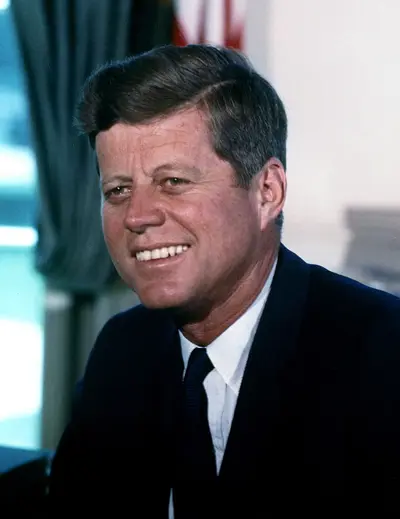
John Fitzgerald Kennedy, often referred to by his initials JFK, was an American politician who served as the 35th president of the United States from 1961 until his assassination in 1963. Kennedy served at the height of the Cold War, and the majority of his work as president concerned relations with the Soviet Union and Cuba. A Democrat, Kennedy represented Massachusetts in both houses of the U.S. Congress prior to becoming president.
