Boris Yeltsin Quotes
Your commanders have ordered you to storm the White House and to arrest me. But I as the elected President of Russia give you the order to turn your tanks and not to fight against your own people.
Yeltsin, Boris. "Appeal to the Soldiers and Officers of the Armed Forces." 20 Aug. 1991, Moscow, Russia. Speech.


Warning to John Calhoun and other South Carolinians about the implications of their nullification of the Tariff Act of 1832:

With martial law came the authority to seize ALL guns in the colony for the emergency. This was not to disarm the general populace. It reflected the fact that there were relatively few colonists who owned guns as they were very expensive. The Governor could take those that existed and use them to defend against the rebels or whatever. There were more gun owners in the Revolution but still a minority. Even after the War of 1812 only 30% of Americans were armed, and that shortly decreased to 10% as there was no real culture of gun ownership in early America. This would come around the Civil War.


He was of course not the President then. But the stands that politicians took with respect to the rebellion of the South often determined their political futures. See {640751} for another future President’s quotation on the subject.


Lincoln was the first President who had ever been elected who was overtly and publicly opposed to slavery. As a result of that and other positions Lincoln took, there were many who would have liked to see him assassinated and there were others who talked of seizing the government in Washington before the radical new President could be sworn in and inaugurated. The plot was not carried out however.


The Army actually violated the laws of West Virginia as well as the Constitutional rights of thousands of people. The justification was that there was a labor dispute in the West Virginia mines and there had been some violence. Capt. Morgan was one of three military officers of a military court which actually took over and assumed absolute control of the strike district. They army broke many more laws than they enforced.

There is a , romantic American myth about the Militiamen in Colonial and Revolutionary America—the citizen soldiers who would leave their farms and rise to the military necessity of the day. However, not only were the militia very hard to muster to duty, but most actually didn’t own or have experience with firearms, and the prevailing opinion of knowledgeable military leaders from George Washington on down was that the militia were not very good soldiers. See {613015}, {613016}, {613022}, {613027}, {621987}, {621988}, {613030}, {613033}, & {613056}


Even before the Russian Revolution there was a Red Scare in America based on the writings of Marks and Engels. Labor Unions were automatically viewed by ultra-conservatives as Communistic and revolutionary. Ironically, the greatest offence that the President committed in many eyes was to have labor leaders to the White House for lunch or dinner or, as he did with the coal strike crisis, have labor negotiators in the White House for mediation. The symbolism of accepting these “radicals” as worthy citizens, in some conservative views, elevated the labor movement to a much higher status than they deserved and to treat them with the same dignity and respect as corporate executives was very offensive. Roosevelt had been made an honorary member of the Locomotive Engineers Union, and this enabled the Sun and other critics to say that Roosevelt joined labor organizations.

At the time Devine was a clandestine CIA agent in Santiago, Chile. The top secret CRITIC cable took precedence over all other cables and messages and also got immediately delivered to the President and other key government officials. The US position at the time was that this coup ousting the very popular, elected left wing, President Salvador Allende was a spontaneous act of the Chilean armed forces in which the United States had no part. President Richard M. Nixon had ordered a series of economic attacks and sanctions on Chile, and the negative economic effect had set the mood for the coup. Years later this secret Cable come to light. It showed that our chief CIA operative in Chile knew about the coup in advance including minute details, and transmitted this data to the President and others in Washington. For many, it was unlikely that the coup plotters would share this level of detail in advance with any country that was not part of the team plotting the coup or had at least given their approval in advance.

The Empress had earlier decided not to try and suppress the Boxers when they started attacking foreigners--{641838}. But now things had gotten out of hand and many ordinary Chinese people—especially Chinese Christians-- were suffering Boxer abuse. Cixi thought the government had to “ally” with the Boxers in the hope that she could influence directions in the future. This, of course, made her anathema in the West and forever damaged her reputation and legacy in Western history.


Italy was in the midst of civil war with the rebels in Emila wanting its independence from the civil authority of the Pope who then controlled virtually all of Italy. The French emperor, Napoleon BonaparteII, advised that the only way to produce peace was to allow Emila to have its independence. He was the last Pope to hold temporal power. While it should not be surprising, the Pope’s statement is essentially the same position that every autocratic authority has taken when there has been some local success of the rebels.
Young China had toppled the Manchu Dynasty, but once in power, they found it much harder to govern—a common happening after revolution.


Spinoza was one of the most feared intellectuals in human history—feared that is by the established power structures. He is the only known person who was excommunicated by the Catholics, the Jews and the Muslims. He was the enemy of authority and advocated personal reason as the guide for men.

Jesuits were leading the “covert action” efforts to destabilize the Elizabethan kingdom.

In 1956, Democratic presidential candidate, Adlai Stevenson, had suggested a nuclear testing ban. The then Vice President made his extreme accusation. See {619523} for another Nixon smear of Stevenson.
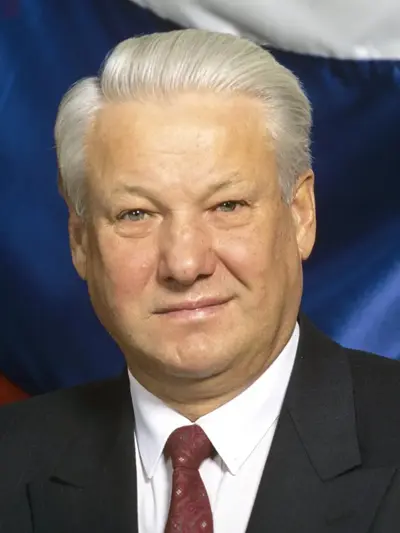
Boris Nikolayevich Yeltsin was a Russian and former Soviet politician who served as the first President of Russia from 1991 to 1999. A member of the Communist Party of the Soviet Union from 1961 to 1990, he later stood as a political independent, during which time he was viewed as being ideologically aligned with conservatism and Russian nationalism.
