ELIZABETH I
This quotation shows us that the 16th century English did not bathe very often. Even the Queen would only bathe once a month and she and the norms of the times did not feel that she “needed” it that often. Many English would go many months without bathing. Other Europeans were as bad or worse. Japan, in contrast, at the same time, had very frequent bathing. The Romans, 1500 years earlier not only bathed very frequently but created facilities for bathing in most Roman communities. Jewish communities also bathed frequently and had ritual baths but these were mainly for women.
These appear in much of her correspondence to Dee. In acknowledgement of the second, Dee signed his letters and reports to the Queen with two zeros (representing his eyes) and the numeral 7 which at the time in numerology was the number of mystery. Many believe that the James Bond moniker of ‘007’ derives from England’s original great secret agent and superspy who the queen would allow almost anything.
Her sister, Mary, the previous Queen, had over 200 Englishmen burned at the stake for their Protestant beliefs. Elisabeth wanted no part of the government trying to determine or regulate the religious beliefs of Englishmen.
This speech is often referred to as her “Golden” or “Farewell” speech. It was her last Parliament.
Centuries later leaders have studied this speech and the actions taken by Elizabeth as the epitome of model leadership and morale building at a time of crisis. What made the event more dramatic were two monarchial norms of the time understood by all the citizens. Monarchs did not open themselves to the risk of very close proximity to their armies with only a handful of retainers. A dissident military commander could kill or capture the monarch as most soldiers had little loyalty to anyone but the commander who paid them. Second, monarchs usually abandoned battlefields where the outcome was uncertain and if not present certainly stayed away. Elizabeth in breaking both these norms was taking obvious risks with her own life (as a women for whom it was even more unexpected) and welfare to share the immediate fate of her subjects. It explains why an absolute monarch was extremely popular with her subjects—great leadership.
James’ supporters (Jacobites) believed James was the rightful heir to the English throne as well.
She responded to the Lord Chief Justice and to Lord Cecil and asked them to so inform the Commons and the House of Lords. Cecil needed three drafts to convey the response but tone it down a little, thus performing the duties of a modern press secretary.
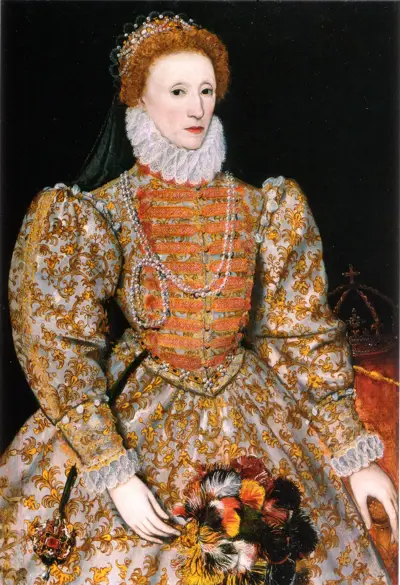
Elizabeth I was Queen of England and Ireland from 17 November 1558 until her death in 1603. Sometimes called the Virgin Queen, Gloriana or Good Queen Bess, Elizabeth was the last of the five monarchs of the House of Tudor.
