James G. Birney Quotes
The American Churches: the Bulwarks of American Slavery
This title of his essay shocked his fellow politicians and may churches that a Congressman would attack churches. Few abolitionists were that outspoken over the disgraceful role that most American Churches had in refraining to oppose slavery. At the time, most Protestant, Roman Catholic, and Jewish clerics either supported slavery or were reluctant to publicly criticize slavery. At the same time the Quakers and many other congregations and clergymen were among the most outspoken and fervent abolitionists. They were very much in the minority,
James G. Birney Title of Essay 1840
Sourced by: Eigen's Political and Historical Quotations


[This was the first Abolition appeal written by a Black Man. It was published in Boston and despite the fact that it was very critical of whites, was very popular going through two more printings within the next two years.]


This moral statement from a New jersey Quaker abolitionist is not particularly noteworthy, However what makes this quote important is that Woolman traveled throughout the South preaching this as his main theme. At that time — before the American Revolution — he did so and was not attacked or intimidated; he was mostly ignored by the Southern authorities. At the time, the South was very confident of its ability to continue slavery. Years later, when the abolition movement grew larger and stronger, a Northern Quaker Preacher doing this not not escape with his life.


This argument—that Christians were more cruel and uncivilized than heathens in some respects was very persuasive to many serious white Christians who began to see slavery and the slave trade in a new light.


Louis Eugene Walcott

Brown was the richest man in Rhode Island and made much of his money in the slave trade. This quotation shows that slavery was not completely a North verses South split. Northerners like Brown for whose family Brown University was named, was as virulent supporter of slavery as the most ardent Southerner.


Senator Glen Taylor was arrested on May 1, 1948, in Birmingham, Alabama by police commissioner Eugene "Bull" Connor, for attempting to use a door reserved for African Americans, rather than the whites-only door, while attempting to attend a meeting of the Southern Negro Youth Congress. He was subsequently convicted of disorderly conduct. It is hard to believe that such a thing happened in America but it did. ER was one of the few Democrats to condemn such behavior. She took a great deal of criticism from the Southern Democrats for this column. They claimed she called White Southerners “Stupid.”

One might think that this remarkable pronouncement would have put an end to Catholic participation and support of slavery. However, in an exercise of theological hair splitting, the Southern Catholic Bishops of the United States took the position that In Supremo outlawed Catholic participation and support of slave trading but not the institution of slavery itself. See {617544} for their official position to the United States Government.

Johnson was then Vice President.


What is interesting is that when he cites the dreadful facts about American slavery, he never points out that the American slave traders rarely raided the villages and captured the slaves themselves. Most often this was done my Khamenei’s Muslim brethren slave traders who dominated the slave trade in Africa. Nor does he point out what after realizing the evil that Americans perpetrated with slavery, we ended it in the 1860s. Saudi Arabia, the central nation of Islam, did not make slavery illegal until 100 years later, and even today, there are many Saudi’s who get caught practicing slavery with household servants and forms of indentured servitude. And while Christians and the Bible tolerated slavery, the Koran and the Prophet never once condemn the practice of slavery. Democracy at any point in time is not always morally right, but it is a process by which under pressure from the people it improves over time because the people can change it and do.
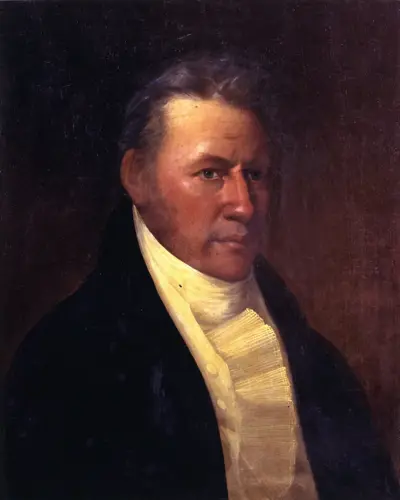
James Gillespie Birney was an abolitionist, politician, and attorney born in Danville, Kentucky. He published an abolitionist weekly publication titled The Philanthropist and twice served as the presidential nominee for the anti-slavery Liberty Party.
