MARTIN LUTHER KING JR.
(Martin King Jr | MLK)

Schuyler was an ardent atheist and a major opponent of organized religion which he regarded as one or the major initiators and drivers of slavery, segregation and discrimination—see related quote. This is why he was critical of Martin Luther King. His irreligiosity prevented his gaining much support from his fellow African Americans even though a great writer like H. L. Menken considered Schuyler, "the best writer in America.”

He was reminiscing about the burden that was always on Dr. Martin Luther King Jr. in his historic leadership of the American Civil Rights Movement. For example, when King decided to begin confronting the southern racist power structure in Birmingham he anticipated a violent reaction. See {585190}. The lowest point came when 4 little school girls were murdered which in a church class of the 16th Street Baptist Church.

25 of the Union’s TWA Airline Workers in Memphis Tennessee had signed a petition to the Union objecting to the Union’s support for King’s desegregation campaign. Quill responded by inviting King to give the main address at the annual union convention. He was prophetic of the danger King faced, but died before King was assassinated.

Characterizing Martin Luther King Jr.:

Referring to Martin Luther King: Hoover tried to prejudice his staff against King when King had not committed any crimes other than being arrested for demonstrating in the South. Hoover ordered a wire tap on King and while no crime was discovered, they learned that King was engaged in some extra marital sexual liaisons. Hoover at the time was in a clandestine, secret, monogamous relationship with another male official of the FBI. Yet he was offended by King's promiscuity. Hoover honestly believed that segregation was the American way, and King's civil rights and equality advocacy in his view was an important part of the Communist program.
Describing Martin Luther King Jr.:


Characterizing Martin Luther King Jr.:
The term refers to the short curly hair that many Backs have. Hoover was an inveterate racist. See {620620} for another example.

Hoover and the FBI were supposed to be enforcing Federal law. However, they could not find any criminal activity on the part of Martin Luther King Jr. They regarded the Civil Rights Movement as a revolutionary threat to the nation. See {620621} and {74219} . So the FBI in an incredible abuse of power, had a meeting of its top officials to plan a strategy for destroying King as a Negro leader in America. We look back on this era where officials who were never elected by anyone, and having no authority from an elected official, took it upon themselves to decide who leaders in America would be.
This memo is yet another example of the racism and paranoia about Civil Rights within the FBI. The Director himself was a racist {620620} . Sullivan was reacting to the Martin Luther King Jr. “I Have a Dream” speech during the march on Washington just before. What made King so dangerous was that he was demanding equal rights for Black and he was very influential with the Black community. Therefore, in FBI logic at the time, King was a great danger to the United States. See {74219} for another example.

At that time the law prohibited Negroes from sitting anywhere in a public bus except the rear. Blacks, if there were not enough rear seats had to stand in the back even if there were many vacant seats in the “white section” of the bus. This was typical of the racial discrimination that existed at that time. That is what all the civil rights demonstrations and boycotts of that era was all about—eliminating government discrimination against Blacks. The Federal Courts including the Supreme Court ruled that the bus segregation was unconstitutional, and the awful practice ended in Montgomery.

King was speaking from a carefully prepared text which did not include the “I have a dream” passage. Jackson, sitting behind the speakers podium, in a loud stage whisper during a pause in King’s speech. King thought for a second or so, pushed is prepared speech aside, gripped both sides of the podium, and launched into what is now considered the iconic phrase of the March on Washington if not the entire civil rights movement, stimulated by the urging of the great singer.

Hoover was an inveterate racist and had an extreme hatred of King. A month later King was awarded the Nobel Peace Prize. What was not known at the time was Hoover, although it had nothing to do with law enforcement, actually contacted New York Cardinal Spellman and illegally transmitted to him parts of FBI confidential and secret files on King for the purpose of persuading the Pope not to grant King an audience. Nonetheless, Hoover himself had a behind the scenes reputation of leaking for his personal purposes and that much of the contents of many FBI files were notes on unsubstantiated claims made by political enemies and often far from the truth. The Cardinal, the Pope and their staffs chose to ignore the Hoover materials.

The agent, at J. Edgar Hoover’s instruction had approached the editor of Martin Luther King Jr.’s hometown newspaper and offered Patterson a photograph of King and a white woman in front of a motel with the “information” that King was having an affair with the woman. The agent suggested that the story was that the minster while pretending to respect Christian morality in his public persona was actually violating basic moral standards. Patterson, like any qualified editor would realize that the photograph proved nothing about an affair. There might have been other staff nearby who were not framed in the picture that the FBI agents had taken. There might have been a meeting to discuss civil rights strategy or something else. To Patterson it was unheard of that a Federal Official should try encourage a newspaper to slander an American citizen. Even if true, the Federal Role was astounding. Actually, this was a very common tactic of J. Edgar Hoover and not at all unusual. Also, although it is not known whether King was having any kind of affair with the woman in the picture, King was not a faithful husband from a sexual point of view. At the time, facts about extramarital sex were not printed about politicians and other political figures even if the journalists knew of them (as with John F. Kennedy’s many liaisons) unless they affected the person’s job or made them less effective. It is not known whether Patterson knew anything of King’s peccadillos but that kind of keyhole journalism was not practiced by serious newspapers at the time even if the pictures could be confirmed. That would be “keyhole journalism”—peeping through keyhole to invade the personal privacy of people.
He gave this instruction before the President or Attorney General had even received the telegram as he had King’s office and home illegally bugged and he knew about the telegram before it was even sent. His people monitored Kings discussions about the telegram.
Turnbow, a Black man in segregationist Mississippi, always carried guns for self-protection and advocated it for all Blacks.

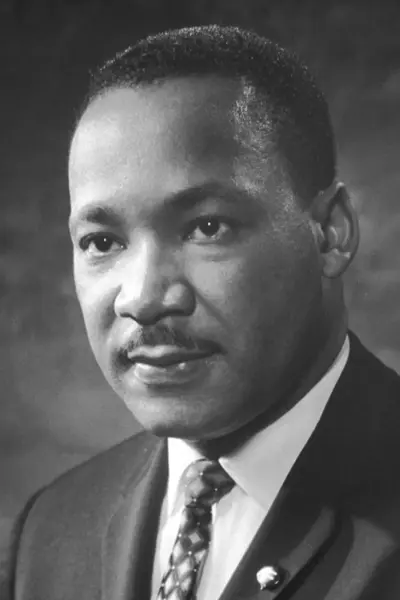
- Born: January 15, 1929
- Died: April 4, 1968
- Nationality: American
- Profession: Clergyman, Activist
Martin Luther King Jr. was an African American Baptist minister and activist who became the most visible spokesperson and leader in the American civil rights movement from 1955 until his assassination in 1968. King advanced civil rights through nonviolence and civil disobedience, inspired by his Christian beliefs and the nonviolent activism of Mahatma Gandhi. He was the son of early civil rights activist Martin Luther King Sr.
