William C. Sullivan Quotes
We must mark him now, if we have not done so before, as the most dangerous Negro of the future of this nation …
This memo is yet another example of the racism and paranoia about Civil Rights within the FBI. The Director himself was a racist {620620} . Sullivan was reacting to the Martin Luther King Jr. “I Have a Dream” speech during the march on Washington just before. What made King so dangerous was that he was demanding equal rights for Black and he was very influential with the Black community. Therefore, in FBI logic at the time, King was a great danger to the United States. See {74219} for another example.
William C. Sullivan, 1912-1977, Federal Bureau of Investigation Director of Intelligence, Secret Internal FBI Memorandum, August 30, 1963
Sourced by: Eigen's Political and Historical Quotations

Hoover and the FBI were supposed to be enforcing Federal law. However, they could not find any criminal activity on the part of Martin Luther King Jr. They regarded the Civil Rights Movement as a revolutionary threat to the nation. See {620621} and {74219} . So the FBI in an incredible abuse of power, had a meeting of its top officials to plan a strategy for destroying King as a Negro leader in America. We look back on this era where officials who were never elected by anyone, and having no authority from an elected official, took it upon themselves to decide who leaders in America would be.

This quotation provides us with several important insights in American history. First, the Director of the FBI was an inveterate racist. Second, he felt no inhibition on sharing this discriminatory view with the Media. Third, he is yet another source for the fact that Blacks did not have a decent opportunity to get an education. There were some Southerners who maintained that they did have such an opportunity in the “Separate but Equal” segregated schools systems of the South. Hoover was not the only racist in the upper ranks of the FBI; most of the leadership was prejudiced. See {620621} and {74219} .


Connor turned out to have been of great assistance to the Civil Rights Movements. His red-neck, ignorant, virulent, irrational hatred and his position made him an iconic, living, hyperbole of the American Southern Racist.


Kennedy was initially very opposed to a civil rights march on Washington and seemed very annoyed to the Blacks in attended. But when faced with the reality of the fact that the March was going to take place and he could not prevent it, he turned around and did everything he could do to protect the marchers and enable the historic event.

Johnson was the first Black man who won the heavyweight championship at a time when racism in America was rampant. Many whites referred to Jeffries as “The Great White Hope” who would take the champion back for the whites. He didn’t and was beaten badly.


The racial inequality did cause a Black revolution in the 1960s. The arrival and influence of Martin Luther King, at the time Black revolution might have turned violent, and the willingness of a substantial number of whites to implement the Civil Rights revolution functioned as a safety valve so that there was substantial reform towards much more racial equality.


The communists were so supportive of the war effort that they were often unconditional defenders of the Roosevelt Administration’s war program. Most communists suspended their advocacy of labor strikes and Black enfranchisement during the war because it would ultimately lead to the weakening of the Allied efforts against the Nazis. Programs such as the “March on Washington Movement” were seen as untimely and therefore subversive. For more communist criticism of attempts during this period to further civil rights see {599051}

A Black church had been bombed in Birmingham, Alabama among the general racial indignity visited upon the Blacks of that city. King’s conversation was not generally known until 2003 when the secretly recorded conversations of the Kennedy Presidency were released, transcribed and analyzed. Shortly after the conversation, JFK called five white leaders of Birmingham and upbraided them about the lack of progress in Birmingham.


Johnson was then Vice President.

Freedom Rides were interracial groups of Civil Rights advocates who boarded public interstate busses in Washington and rode South through some of the most segregated communities in the country. As the bus stopped at the segregated rest stops, the Black Freedom Riders would use the “white” waiting rooms, toilets, and other facilities which was against the local custom and law. Racist segregationists often brutalized and assaulted the Freedom riders whose leaders demanded Federal Protection. The Attorney General and others were trying to get the local politicians and law enforcement officials to protect the Freedom Riders, but often these were the worst of the racist segregationists. Kennedy thought if he could have a “cooling off period” for a few days, he could persuade the locals to protect the Freedom Riders from the mobs with the threat of sending Federal Marshalls or troops for the protection. So he asked Farmer and other Freedom Ride organizers to stop the Freedom Rides for a few days. This was Farmer’s famous response. The Freedom Rides continued and forced the Federal Government to respond on a timetable they did not prefer.

Wilson, a history and government professor and college president before politics, was has been accused of being one of the most racist Presidents since Reconstruction. Prior to his Presidency, the Federal Government had been making steady progress in hiring African Americans. Under Wilson there was a wholesale firing of a large proportion of them. Some apologists argue that his League of Nations and other major aspirations required the votes and cooperation of Southern Senators who insisted that many of the blacks be terminated. At the same time, the KKK was near the zenith of its membership and political power and was an intimidating force. Wilson’s home state of New Jersey not only had a large KKK membership but there were lynching of Blacks in his own state and when Governor and President he never asked for any anti-lynching legislation.


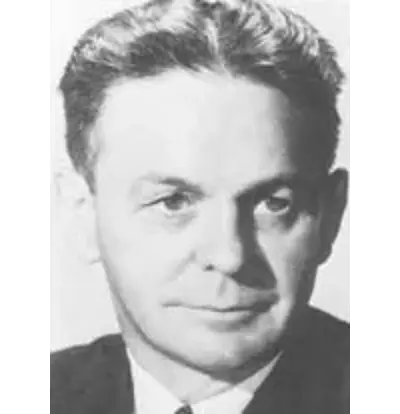
- Born: May 12, 1912
- Died: November 9, 1977
- Nationality: American
- Profession: Law Enforcement Officer
William Cornelius Sullivan was a Federal Bureau of Investigation official who directed the agency's domestic intelligence operations from 1961 to 1971. Sullivan was forced out of the FBI at the end of September 1971 due to disagreements with FBI director J. Edgar Hoover. The following year, Sullivan was appointed as the head of the Justice Department's new Office of National Narcotics Intelligence, which he led from June 1972 to July 1973. Sullivan died in a hunting accident in 1977. His memoir of his thirty-year career in the FBI, written with journalist Bill Brown, was published posthumously by commercial publisher W. W. Norton & Company in 1979.
