H. L. Mencken Quotes
One of the things that makes a Negro unpleasant to white folk is the fact that he suffers from their injustice. He is thus a standing rebuke to them.
H. L. Mencken, 1880-1956, Columnist & Journalist, Notebook, ‘Minority Report’
Sourced by: Eigen's Political and Historical Quotations

Johnson was the first Black man who won the heavyweight championship at a time when racism in America was rampant. Many whites referred to Jeffries as “The Great White Hope” who would take the champion back for the whites. He didn’t and was beaten badly.


Named after penal reformer Johne Howard, 1726-1790. Howard Associations have since been organized in many countries.


Bilbo was one of the worst racists who ever served in the Congress.

This quotation has been one that has been used to argue against Black and other minority racism as well as white racism.


Interestingly, before 1705, there was no legislative prohibition against Indians and Free Negroes being full citizens including holding public office and voting. This act prohibited them from holding public office, but did not prohibit them from Voting provided they met the general voting requirement of being a landholder. However, 18 years later, voting by these minorities was no longer allowed. See Quotation 643588.

Black protests and demonstrations were emerging throughout the country after a white police officer shot to death an unarmed black teenager in Ferguson, MO. This argument was made by a number of police apologist whites who could not understand the ferocity and passion of the demonstrations, but Giuliani was the most prominent politician taking that viewpoint. See {642521} for the refutation and response.


Johnson was then Vice President.


Booth was the younger son of a very prominent Northern family of actors. His older brother was considered the greatest American actor, and the rest of the family were abolitionists and vehement Union supporters. They found young John’s views reprehensible.

Bilbo was one of the worst racists who ever served in the Congress.


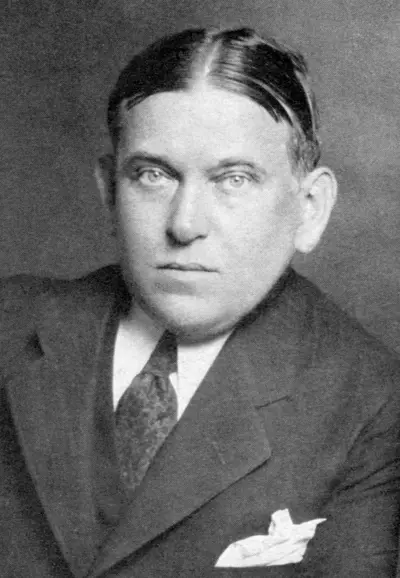
Henry Louis Mencken was an American journalist, essayist, satirist, cultural critic, and scholar of American English. He commented widely on the social scene, literature, music, prominent politicians, and contemporary movements. His satirical reporting on the Scopes Trial, which he dubbed the "Monkey Trial," also gained him attention.
