Frederick Douglass Quotes
E have men sold to build churches, women sold to support the gospel, and babes sold to purchase Bibles for the poor heathen, all for the glory of God and the good of souls. The slave auctioneer's bell and the church-going bell chime in with each other, and the bitter cries of the heart-broken slave are drowned in the religious shouts of his pious master. Revivals of religion and revivals in the slave trade go hand in hand.


Observation of the other fugitives in Canada

The sexual exploitation of female slaves by the slave owner and/or his relatives was a phenomenon about which most Southerners were in denial. Light skinned and even white babies, born to Negro slaves was fairly common. The gross immorality was so great that it was too painful for most Southerners – especially white females to even contemplate much less discuss. At the same time, the abolitionists had to be very careful that to raise this problem as delicately as possible lest the lost their audience with such gross and indelicate behavior. This quotation was particularly artfully phrased.

This moral statement from a New jersey Quaker abolitionist is not particularly noteworthy, However what makes this quote important is that Woolman traveled throughout the South preaching this as his main theme. At that time — before the American Revolution — he did so and was not attacked or intimidated; he was mostly ignored by the Southern authorities. At the time, the South was very confident of its ability to continue slavery. Years later, when the abolition movement grew larger and stronger, a Northern Quaker Preacher doing this not not escape with his life.

This title of his essay shocked his fellow politicians and may churches that a Congressman would attack churches. Few abolitionists were that outspoken over the disgraceful role that most American Churches had in refraining to oppose slavery. At the time, most Protestant, Roman Catholic, and Jewish clerics either supported slavery or were reluctant to publicly criticize slavery. At the same time the Quakers and many other congregations and clergymen were among the most outspoken and fervent abolitionists. They were very much in the minority,


It was then the practice of some men to engage in an attempted moral justification of slavery, including, in many cases, resorting to Biblical scripture and principles to argue that slavery was the will of God.


The highest court in New York.

One of the first anti-slavery formal resolutions in America.


Oastler was a mill owner himself.
This may be the first formal resolution against slavery in the Americas. This quotation shows the fact that not only did these Mennonites oppose slavery, and chastise those who bought slaves as much as the slave capturers, but they argued that the slaves had a perfect right to armed struggle to free themselves—the greatest fear of slaveholders in America. The term “negers” was not a word of disrespect but was derived from the low German spoken by the Mennonites.
The Republican Party condemned polygamy and slavery in its party platform of 1856


After his Presidency, Adams served in the House of Representatives for many years and was thus active in politics.
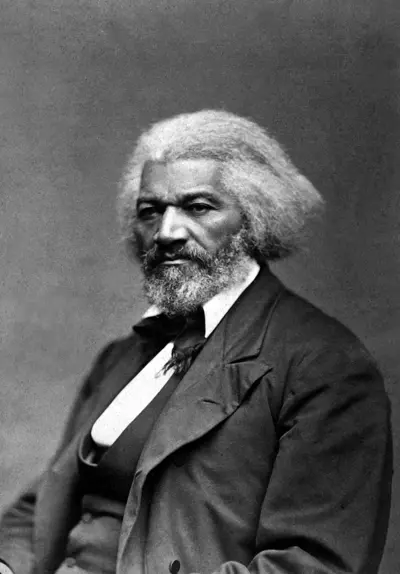
Frederick Douglass was an American social reformer, abolitionist, orator, writer, and statesman. After escaping from slavery in Maryland, he became a national leader of the abolitionist movement in Massachusetts and New York, becoming famous for his oratory and incisive antislavery writings. Accordingly, he was described by abolitionists in his time as a living counterexample to slaveholders' arguments that slaves lacked the intellectual capacity to function as independent American citizens. Likewise, Northerners at the time found it hard to believe that such a great orator had once been a slave.
