Henry Charles Lea Quotes
Not only were all Christians thus made to feel that it was their highest duty to aid in the extermination of heretics, but they were taught that they must denounce them to the authorities regardless of all considerations, human or divine. No tie of kindred served as an excuse for concealing heresy. The son must denounce the father, the husband was guilty if he did not deliver his wife to a frightful death. Every human bond was severed by the guilt of heresy; children were taught to desert their parents, and even the sacrament of matrimony could not unite an orthodox wife to a misbelieving husband. No pledge was to remain unbroken. It was an old rule that faith was not to be kept with heretics
Henry Charles Lea, 1825–1909, Historian & President, American Historical Association, A History of the Inquisition of the Middle Ages, 1888
Sourced by: Eigen's Political and Historical Quotations


The Inquisition had tortured De Molay and his fellow Templars forcing them to confess to blasphemy, homosexuality and other capital crimes. Finally De Molay was sentenced to be burned at the stake. At the last moment he confessed to having lied under torture.

This was the beginning of the inquisition.


Samuel Langhorne Clemens, 1835-1910

While Aquinas brought much wisdom and good to the Church, this statement and others laid a foundation for murdering non-believers and organizing the Inquisition.


The King, a religious exremist fanatic, was a great supporter of the Inquisition whose excesses were horrible during his reign.


This began the Church's most notorious attack on any dissent or disagreement and it was the start of the Inquisition.

This particular quotation was very damaging to Christians of the era. Voltaire was almost universally regarded as the greatest mind of Europe at the time. He was consulted by powerful monarchs and others throughout Europe. He influenced major figures of the day like Catherine the Great. Voltaire did believe in God. See {621200}.

While moderate Muslims interpret this sura as meaning that theologically, a belief in the divinity of Christ is inconsistent to Islam, extreme fundamentalists take this to indicate that Christians are heretics and should be executed in accordance with Sharia – Islamic Law.

Toleration is a relative term. The Muslim Moors made Christians (and Jews) pay a special tax. At times they were forced to wear special clothing so that they could be readily identified. And they could not build churches larger or taller than the smallest mosque in the community. At times, their occupations were restricted but at other times Christians and Jews were appointed to the highest positions like Vizier. The Inquisition, in contrast, forced all Muslims (and Jews) to leave the country without any of their property or money or be tortured and killed—usually by burning at the stake unless of course that they converted to Christianity.

The King, a religious fanatic, was a great supporter of the Inquisition whose excesses were even more horrible during his reign than others.

Ingersoll was considered to be the greatest orator and political thinker of his day, but his overt atheistic views curtailed his elected political career.

Some of the founding fathers were deeply religious men while others were not so. Some varied in their believes at different times of their lives, and a number were not very facorable towards orthodox religion. At the time, Roman Catholic and Protestant churches were persecuting other religions throughout Europe and people were still being killed for their heretical beliefs. Most important to some of them, kings and other monarchs whom they abhorred, all at the time claimed the Divine Right of Kings and the established churches were the most important support for monarchs. At the time most organized religions were opposed to freedom of conscience and certainly opponents of separation of church and state. American churches tended to take on American values but were never given the chance to dominate the American government they way many had in Europe and the rest of the world.


The Governor opposed Jews being allowed into the colony at all, but was overruled by the Dutch West India Company. He feared that this would set a precedent and then Catholics and other “dissenters” would come to New York. He then prohibited them from worshipping as Jews {35223} but was again overruled. He was a very unpopular Governor who himself was a Calvinist fundamentalist having been the son of a Calvinist minister and studied for the ministry himself. The company set the standard of religious tolerance and enforced it. See {611104}. The governor predicted the consequence and the precedent did indeed allow Catholics to come to New York and both Jews and Catholics have been significant New York population groups ever since.


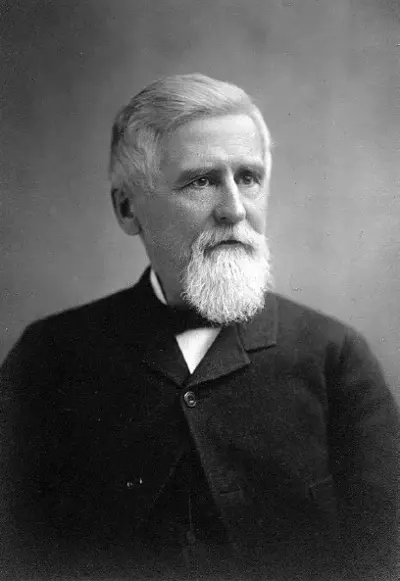
Henry Charles Lea was an American historian, civic reformer, and political activist. Lea was born and lived in Philadelphia.
