Henry Charles Lea Quotes
[Spanish] unreasoning religious ardor culminated in the Inquisition, established for the purpose of securing the supreme good of unblemished purity and uniformity of belief. Nothing was allowed to stand in the way of this, and no sacrifice was deemed too great for its accomplishment. All officials, from the king downward, were sworn to its support, and the sinister influence which it exercised was proportioned to the enormous power which it wielded.
Henry Charles Lea, 1825–1909, Historian & President, American Historical Association, “The Decadence of Spain”, The Atlantic Monthly, July 1898
Sourced by: Eigen's Political and Historical Quotations

Ingersoll was considered to be the greatest orator and political thinker of his day, but his overt atheistic views curtailed his elected political career.


The King, a religious exremist fanatic, was a great supporter of the Inquisition whose excesses were horrible during his reign.


Toleration is a relative term. The Muslim Moors made Christians (and Jews) pay a special tax. At times they were forced to wear special clothing so that they could be readily identified. And they could not build churches larger or taller than the smallest mosque in the community. At times, their occupations were restricted but at other times Christians and Jews were appointed to the highest positions like Vizier. The Inquisition, in contrast, forced all Muslims (and Jews) to leave the country without any of their property or money or be tortured and killed—usually by burning at the stake unless of course that they converted to Christianity.


Since Muslims try and convert others, one who changes religion and becomes a Muslim is exempt. The death penalty is reserved for Muslims who leave the religion.


This edict gave great support to the Inquisitors of all Catholic countries. See {617572}


This was the beginning of the inquisition.


Servetus’ book On the Motion of the Heart and Blood of Animals, was so threatening that of the 1000 copies that were printed only 3 survived the burning including ironically Calvin’s personal marked up copy.

The Torah comprises the first 5 books of the Bible (Old Testament). The Arab countries of the Middle East are not alone in having to content with ultra-religious clerics who want to control the government and use it to impose religious law on the entire population. Israel also has the problem. In the Arab countries to deny being religion is to put yourself in danger including risking your life. So no one really knows what proportion of the population supports the religious imposition from the government. In Israel, however, this is easily determined by polls. The majority of Israelis are secular Jews. Of the religious Jews, the majority of them believe in extensive separation between the state and the religion. But there is a minority of ultra-orthodox which would have Israel to be a Theocracy. They are a minority but they are politically very strong. They receive large financial support from extremely wealthy Americans, have religious political parties, are extremely passionate advocates, and are willing to devote huge amounts of time to make Israel a more religious state and ideally a theocracy. Ironically, there is a great religious and philosophical similarity between the extremist Jews of Israel and the extremists Muslims in many of the Arab nations. They both want a theocracy. The only difference is which religion should the Theocracy represent.
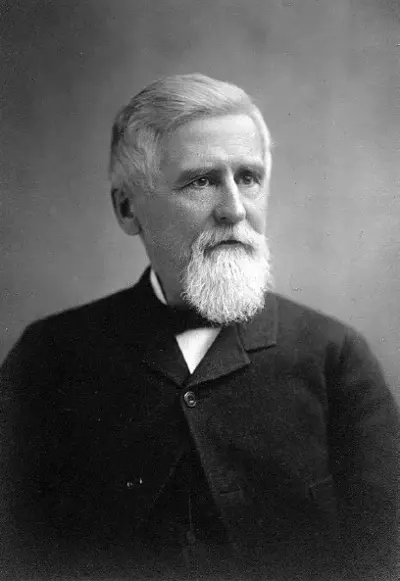
Henry Charles Lea was an American historian, civic reformer, and political activist. Lea was born and lived in Philadelphia.
