Henry Charles Lea Quotes
The real significance of the [Spanish] Inquisition lay in the isolation to which it condemned the land, and its benumbing influence on the intellectual development of the people…. It [also] obstructed … commercial relations by imposing absurd and costly regulations at the ports to prevent the slightest chance of the introduction of heretical opinions.
Henry Charles Lea, 1825–1909, Historian & President, American Historical Association, “The Decadence of Spain”, The Atlantic Monthly, July 1898
Sourced by: Eigen's Political and Historical Quotations


Ingersoll was considered to be the greatest orator and political thinker of his day, but his overt atheistic views curtailed his elected political career.

The King, a religious exremist fanatic, was a great supporter of the Inquisition whose excesses were horrible during his reign.

Toleration is a relative term. The Muslim Moors made Christians (and Jews) pay a special tax. At times they were forced to wear special clothing so that they could be readily identified. And they could not build churches larger or taller than the smallest mosque in the community. At times, their occupations were restricted but at other times Christians and Jews were appointed to the highest positions like Vizier. The Inquisition, in contrast, forced all Muslims (and Jews) to leave the country without any of their property or money or be tortured and killed—usually by burning at the stake unless of course that they converted to Christianity.


It is this verse that for some Muslims justifies terrorism against non-Muslims. See {584354} for a specific example. There are similar provisions in the Old Testament which a few extremely conservative Jews and Christians have used to advocate for blasphemy being a capital crime. Note that if an unbeliever repents and becomes a Muslim, he should be spared.


Servetus’ book On the Motion of the Heart and Blood of Animals, was so threatening that of the 1000 copies that were printed only 3 survived the burning including ironically Calvin’s personal marked up copy.

This was the beginning of the inquisition.

Rushdie was commenting on the Danish Cartoons that had been published the year before depicting the Islamic Prophet Muhammad to the great distress of some fundamentalist Muslims some of whom orchestrated riots in many countries involving much property destruction and some loss of life. See {590918} as an example of the concern.

Louisiana was then a possession of France

The origins of the extreme religious intolerance of Spain occurred centuries before the excesses of the Spanish Inquisition. Before the Conference the Visigoths and their king had been converted to Christianity but not all cared for the new religion.

Since Muslims try and convert others, one who changes religion and becomes a Muslim is exempt. The death penalty is reserved for Muslims who leave the religion.
In one of the historical ironies of the 12th century, a Christian sect preferred the rule of the Muslims than their Christian brethren—on the grounds of religious tolerance. It illustrates the changes that take place over time. By the 21st century, it was the Christians who were thought of as tolerant and the Muslims as the opposite.

This quotation—presented in its entirety because it is so unbelievable—illustrates one of the uglier and nasty aspects of Colonial America. Most of us associate early American colonists with persecuted minorities escaping the intolerance of Europe, but so much of the concept of tolerance then concentrated on the rights of a religious community but provided little if any obligation to then be tolerant of OTHER minorities in their colonies and communities. In this case, Massachusetts Christians did not perceive Quakers as either Christians or another sect to be tolerated. They not only wanted the Quakers stopped from coming to other parts of America, but actually attempted to interdict the Quaker immigrant ship, capture the Quakers, and sell them into slavery in the Caribbean. What makes the incident even more offensive is that the ethics of this was never questioned and was even justified as Christian acts and even duty. The Welcome evaded the Porpoise The founding fathers knew about these incidents and the religious discrimination that was rampant in many Colonial communities as bad as England and Europe. Hence, the separation of Church and State concepts were not just protections against the way of the old world, but dealt with a clear and present danger that Colonial history had demonstrated.

In most countries those who identify with the economic views of Mises also tend to be strong supporters of orthodox religion—usually Christianity. American conservative Republicans are typical. However they rarely are aware of views and quotations of their intellectual guru that are evidenced by this quote. See {632408} for another quotation that distressed many European conservative devotees of Mises.
This quote is significant for several reasons. First, it illustrates the theological dimension of the Saudi Arabian kingdom where the Royal Family maintains its position by always accommodating and financing the Wahabi fundamentalist version of Islam. Second, it shows how difficult it is for modern science to be taught and understood in fundamentalist Islamic societies. Third, it illustrates a historically classic repressive logic: He who disagrees with the current religious orthodoxy is disagreeing with the espousers of that religion. And if the espousers are wrong, they are lying. Therefore the dissenter is accusing God and his prophets of being liars. That is blasphemy and an insult to all believers. Last, it illustrates the parallel between Islam and Christianity in development. The latter is 700 years older than Islam, and about that long ago, the Roman Catholic Church repressed Galileo for claiming that the Earth was not the center of the universe.

Samuel Langhorne Clemens, 1835-1910

This edict gave great support to the Inquisitors of all Catholic countries. See {617572}


While Aquinas brought much wisdom and good to the Church, this statement and others laid a foundation for murdering non-believers and organizing the Inquisition.

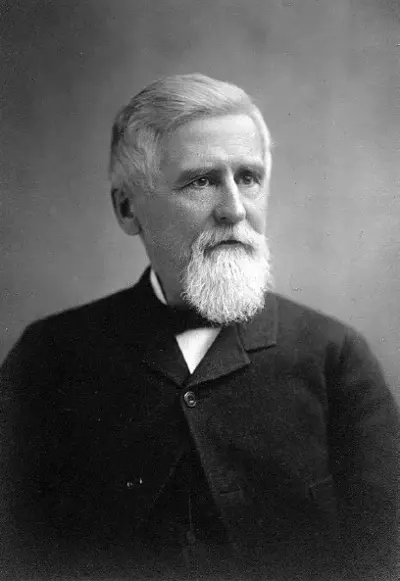
Henry Charles Lea was an American historian, civic reformer, and political activist. Lea was born and lived in Philadelphia.
