Cotton Mather Quotes
There is now at sea a ship called the Welcome, which has on board an hundred or more of the heretics and malignants called "Quakers," with W. Penn, who is the chief scamp, at the head of them. The general court [governmental body of Massachusetts] has accordingly given secret orders to Master Malachi Huscott, of the brig Porpoise, to waylay the said Penn and his ungodly crew, so that the Lord may be glorified, and not mocked on the soil of this new country with the heathen worship [sic] of these people. Much spoil can be made by selling the whole lot to Barbados, where slaves fetch good prices in rum and sugar.
This quotation—presented in its entirety because it is so unbelievable—illustrates one of the uglier and nasty aspects of Colonial America. Most of us associate early American colonists with persecuted minorities escaping the intolerance of Europe, but so much of the concept of tolerance then concentrated on the rights of a religious community but provided little if any obligation to then be tolerant of OTHER minorities in their colonies and communities. In this case, Massachusetts Christians did not perceive Quakers as either Christians or another sect to be tolerated. They not only wanted the Quakers stopped from coming to other parts of America, but actually attempted to interdict the Quaker immigrant ship, capture the Quakers, and sell them into slavery in the Caribbean. What makes the incident even more offensive is that the ethics of this was never questioned and was even justified as Christian acts and even duty. The Welcome evaded the Porpoise The founding fathers knew about these incidents and the religious discrimination that was rampant in many Colonial communities as bad as England and Europe. Hence, the separation of Church and State concepts were not just protections against the way of the old world, but dealt with a clear and present danger that Colonial history had demonstrated.
Cotton Mather, 1663-1728, Massachusetts Cleric and Historian, Letter to John Higgenson, September 15, 1682
Sourced by: Eigen's Political and Historical Quotations

See {611241}, {611246}, {611442}. While the issues with Cromwell were essentially political, there were substantial theological and cultural issues between the Quakers and other protestant sects which even extended across to the New World. See {612011}


This was the beginning of the inquisition.


The King, a religious exremist fanatic, was a great supporter of the Inquisition whose excesses were horrible during his reign.

Both Puritans and Quakers were persecuted and physically abused in England by the Anglican Church. The Puritans as soon as they became dominant in part of the American colonies began persecuting Quakers. The Quakers who were the majority in the Pennsylvania colony, however were tolerant of other religions. This history was another of the many reasons the Founding Fathers wanted no established church. A “scorpion” was a type of whip that was particularly painful.

Toleration is a relative term. The Muslim Moors made Christians (and Jews) pay a special tax. At times they were forced to wear special clothing so that they could be readily identified. And they could not build churches larger or taller than the smallest mosque in the community. At times, their occupations were restricted but at other times Christians and Jews were appointed to the highest positions like Vizier. The Inquisition, in contrast, forced all Muslims (and Jews) to leave the country without any of their property or money or be tortured and killed—usually by burning at the stake unless of course that they converted to Christianity.


Louisiana was then a possession of France


Odo of Chatillon-Sur-Marne. This is an amazingly distressing quotation for most moderns. Here we have the Pope preaching genocide and ethnic cleansing. This was one of the main triggers of the bloody Crusades and is not forgotten by Muslims in the Middle East Today. As Islam has not changed a great deal in 1000 years, most Muslims assume that the same is true of Christianity and especially the popes and the Roman Catholic Church. This is one of the reasons that the Islamic world reacts so strongly when a pope makes any statement negatve about Muslims and Islam.

Wesley had been to Island several times and was interested in affairs there. He was a strong advocate of freedom of religion but the violence of the earlier religious conflict made him very wary of the Irish Roman Catholics who seemed to him particularly prone to religious violence.

What the historian did not know was how similarly the Protestants would behave against the Catholics when they had the power. Since the Catholics were the established church, and the Protestants the new “heretics” the Protestants were on the receiving end of most of the atrocities at the beginning. However, as if they had been scholled by their horrible experiences, they repeated them just exchanging the perpetrators and the victims.

This is a particularly interesting historical quotation because it succinctly gives a history of the various horrors of religious strife in British history—a history that was very well known to the American Founding Fathers and the general American Colonial population. This history was the major driver behind the public insistence for the Bill of Rights and the 1st Amendment which erected a wall of separation between church and state with government never favoring or abetting any particular religion.

Samuel Langhorne Clemens, 1835-1910

The General Court was the Legislature and the Judiciary of the Colony of Massachusetts. Quakers could be arrested without a warrant that protected all others, and were offered a choice between banishment and death. Our Founding Fathers were very familiar with this law and the many others like it when they wrote the First Amendment allowing freedom of religion and banning an America established church.

Ingersoll was considered to be the greatest orator and political thinker of his day, but his overt atheistic views curtailed his elected political career.

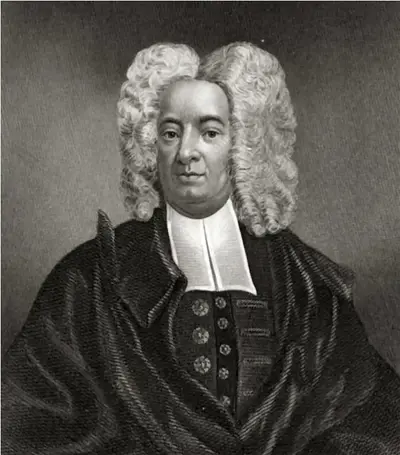
- Born: February 12, 1663
- Died: February 13, 1728
- Nationality: American
- Profession: Minister
Cotton Mather /ˈmæðər/ FRS was a New England Puritan minister, prolific author, and pamphleteer. One of the most important intellectual figures in English-speaking colonial America, Mather is remembered today chiefly for his Magnalia Christi Americana (1702) and other works of history, for his scientific contributions to plant hybridization and to the promotion of inoculation as a means of preventing smallpox and other infectious diseases, and for his involvement in the events surrounding the Salem witch trials of 1692–3. He also promoted the new Newtonian science in America and sent many scientific reports to the Royal Society of London, which formally elected him as a fellow in 1723. A controversial figure in his own day, he sought unsuccessfully the presidency of Harvard College, which had been held by his father Increase, another important Puritan intellectual.
