August Bebel Quotes
Christianity is the enemy of liberty and of civilization. It has kept mankind in chains.
August Bebel, 1840-1913, German Social Democratic leader, Parliamentary Debate, March 31, 1881
Sourced by: Eigen's Political and Historical Quotations


Spinoza was one of the most feared intellectuals in human history—feared that is by the established power structures. He is the only known person who was excommunicated by the Catholics, the Jews and the Muslims—all were forbidden to read his works. He was the enemy of authority and advocated personal reason as the guide for men.


Executed by the English for his part in the Easter Uprising. His observations seem even more prescient as later theocracies like Iran ruined their societies and progress and twisted the Islamic religion. Ireland’s independence did not separate the state from the control and influence of the Roman Catholic Church despite the warnings of Connolly and others. However, conflict with the Church in 2010 over the church sexually assaulting children and impeding the civil authorities from investigating and protecting the criminals led to a reexamination and a diminution of the role of the church in Ireland.


The classic dilemma is that religious moderates and scientists do not argue to force everyone to follow the dictates of science, but in almost all societies and nations, religious fundamentalists strive to force their beliefs on all and make disagreement illegal.


Just days before September 11. While in America, such a remark would just be considered an insensitive and inappropriate utterance, in France, he was brought before the courts and threatened with jail and a large monetary fine under a 1972 French law which bans hate speech. See {595311}

Some scientists are religious believers. Many are not. However, relatively few hold the position that Dawkins does that religion is and has been an evil force in the world. These argue that religions and religious factionalism has caused as many deaths as epidemics and pandemics and is an evil for society. While that argument has been historically true in much of the world, religious conflict deaths has actually decreased in frequency over the last century and may be at a world-wise low as a percentage of the world population. With the exception of Islamic fundamentalist extremism, there is no religious group that advocates religious violence and has a majority of any country. Moderate Muslims have never before been in greater numbers, so it can be argued that modern society and most religions have been reforming themselves over the years.

This particular quotation was very damaging to Christians of the era. Voltaire was almost universally regarded as the greatest mind of Europe at the time. He was consulted by powerful monarchs and others throughout Europe. He influenced major figures of the day like Catherine the Great. Voltaire did believe in God. See {621200}.

Islamic modernists like Serageldin are many among the educated Muslims but their views are often drowned out by the violence and extremist statements of the fundamentalists.

Some of the founding fathers were deeply religious men while others were not so. Some varied in their believes at different times of their lives, and a number were not very facorable towards orthodox religion. At the time, Roman Catholic and Protestant churches were persecuting other religions throughout Europe and people were still being killed for their heretical beliefs. Most important to some of them, kings and other monarchs whom they abhorred, all at the time claimed the Divine Right of Kings and the established churches were the most important support for monarchs. At the time most organized religions were opposed to freedom of conscience and certainly opponents of separation of church and state. American churches tended to take on American values but were never given the chance to dominate the American government they way many had in Europe and the rest of the world.


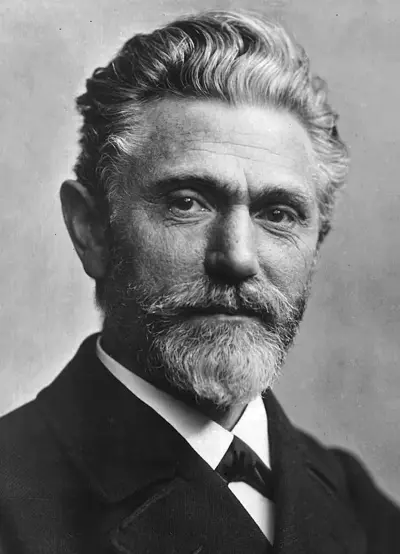
Ferdinand August Bebel (22 February 1840 – 13 August 1913) was a German socialist politician, writer, and orator. He is best remembered as one of the founders of the Social Democratic Workers' Party of Germany (SDAP) in 1869, which in 1875 merged with the General German Workers' Association into the Socialist Workers' Party of Germany (SAPD). During the repression under the terms of the Anti-Socialist Laws, Bebel became the leading figure of the social democratic movement in Germany and from 1892 until his death served as chairman of the Social Democratic Party of Germany.
