Barbara Tuchman Quotes
The emphasis on sorcery reflected accusations by the authorities more than it did actual practice. Being threatened, the Church responded by virulent persecution.
Barbara Tuchman, 1912-1989, Historian, Describing the 14th Century, A Distant Mirror, 1978
Sourced by: Eigen's Political and Historical Quotations

Samuel Langhorne Clemens, 1835-1910


Professor Clark wrote this historical description of witchcraft and the Inquisition in contemporary verbiage as we would discuss the solution to serious problems of today. His overall point is that when society fears something, it establishes and institution to cope with the object of the fear, and the institution itself creates more fear as this is the way it “succeeds.” A more recent historical example was when Congress created House and Senate Committees to cope with the problem of communists infiltrating and undermining our important institutions. This had not been a problem until Senator Joseph McCarthy and a few others claimed that they had found thousands in our military, state department and other government agencies. In the final analysis, while there were NO witches, there were only a few former communists in government and most were fiction and imagination. Yet society went through a Red Scare that in some ways paralleled society’s problem with witchcraft.


The King, a religious exremist fanatic, was a great supporter of the Inquisition whose excesses were horrible during his reign.


This was the beginning of the inquisition.


Ingersoll was considered to be the greatest orator and political thinker of his day, but his overt atheistic views curtailed his elected political career.

While Aquinas brought much wisdom and good to the Church, this statement and others laid a foundation for murdering non-believers and organizing the Inquisition.
Most people think that the Spanish Inquisition was the locus of witch burning, but it was not. Germany was.


For another of his suspicions which turned out to be justified, see {636169}.

This was a poem about the early persecution of Quakers.
While Christianity and other religious groups were the inventors of these particular devices of compulsion of conscience, in modern times, but almost all other groups have given up torture and execution as a means of compelling religious obedience, many Muslim nations, even in modern times use the machine gun or the headman’s sword or other barbaric means to punish heretics. At the beginning of the third millennium, Islamic theocracies such as Iran, commonly executed followers of the Bhai and other non-Islamic religions. Many historians feel that the Muslims learned from the Christians such barbarity, but maintained the practices long after the questions had abandoned them. In addition, Shiite and Sunni Muslims have been butchering each other for centuries in dominate Islam nations and trying to force their interpretation of Islam in each other. The practice still continues.
Referring to carcinogens in the products:
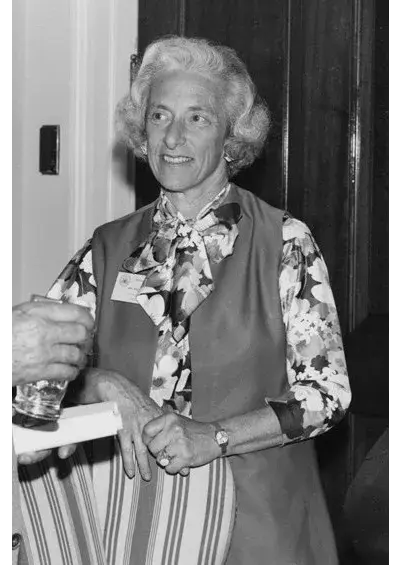
Barbara Wertheim Tuchman was an American historian and author. She won the Pulitzer Prize twice, for The Guns of August (1962), a best-selling history of the prelude to and the first month of World War I, and Stilwell and the American Experience in China (1971), a biography of General Joseph Stilwell.
