Al-Jahiz Quotes
The piety of theologians consists of hastening to denounce dissidents as unbelievers.
al-Jahiz, c. 776-c. 869, Islamic Theologian and Commentator, Quoted in Bernard Lewis, The Middle East
Sourced by: Eigen's Political and Historical Quotations

At the time Islam was quite conflicted about the role of innovation, science and reform. Innovators were to many theologians as dangerous to society as heretics and had to be refuted. Al-Ashari’s school of thought has prevailed in much of the Muslim world to this day.

The King, a religious exremist fanatic, was a great supporter of the Inquisition whose excesses were horrible during his reign.
This began the Church's most notorious attack on any dissent or disagreement and it was the start of the Inquisition.

While Aquinas brought much wisdom and good to the Church, this statement and others laid a foundation for murdering non-believers and organizing the Inquisition.

Ingersoll was considered to be the greatest orator and political thinker of his day, but his overt atheistic views curtailed his elected political career.

Since Muslims try and convert others, one who changes religion and becomes a Muslim is exempt. The death penalty is reserved for Muslims who leave the religion.
The King, a religious fanatic, was a great supporter of the Inquisition whose excesses were even more horrible during his reign than others.


The mullahs had a great deal of power in Iraq and were among the most vocal opponents of democracy and freedom and instead argued for a Theocracy under Islamic law—Sharia which allowed almost no freedoms for the individual.
While Christianity and other religious groups were the inventors of these particular devices of compulsion of conscience, in modern times, but almost all other groups have given up torture and execution as a means of compelling religious obedience, many Muslim nations, even in modern times use the machine gun or the headman’s sword or other barbaric means to punish heretics. At the beginning of the third millennium, Islamic theocracies such as Iran, commonly executed followers of the Bhai and other non-Islamic religions. Many historians feel that the Muslims learned from the Christians such barbarity, but maintained the practices long after the questions had abandoned them. In addition, Shiite and Sunni Muslims have been butchering each other for centuries in dominate Islam nations and trying to force their interpretation of Islam in each other. The practice still continues.


Official List of groups which were prohibited from religiously criticizing the Catholic Church—the established church of Maryland. One interesting observation is that the Jesuits—a Catholic order were on this list. Catholic orders did not then subject their representatives to the authority of the local bishops and took direction only from the Pope. In the case of the Jesuits at the time, there were many who believed the Jesuits were beyond the de facto control of the Papacy and some Jesuits thought they should be—thus the two designations of Jesuits. This makes clear the fundamental intolerance that was common on many parts of Colonial America, that criticism of and heresy to the Established Church was not to be permitted. To the orthodox Catholics of Maryland, they were as concerned with the potential criticisms of Catholic Jesuits as they were with those of Puritans or Anabaptists. Compare Maryland, a Catholic colony with a huge antipathy towards Puritans, with Massachusetts, a Puritan Colony, and its strong antipathy and intolerance for Catholics. It is almost impossible to imagine a union of the American colonies without a 1st Amendment.


Whoever teaches differently from what I have taught, … condemns God and must remain a child of hell.
Humility and doubt were not characteristics of Martin Luther.
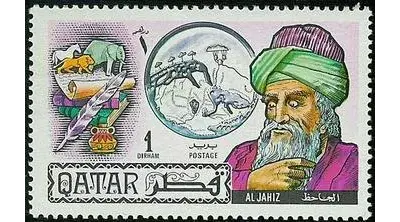
Abū ʿUthman ʿAmr ibn Baḥr al-Kinānī al-Baṣrī, commonly known as al-Jāḥiẓ was an Arab prose writer and author of works of literature, Mu'tazili theology, zoology, and politico-religious polemics.
