Henri de Lubac Quotes
… heresy no longer shocks us; at least, it no longer convulses us like something trying to tear the soul of our souls away from us.... And that is why we have no trouble in being kind to heretics, and no repugnance in rubbing shoulders with them.
Henri de Lubac, 1896–1991, French Cardinal of the Catholic Church, Paradoxes of Faith, 1987
Sourced by: Eigen's Political and Historical Quotations


While Aquinas brought much wisdom and good to the Church, this statement and others laid a foundation for murdering non-believers and organizing the Inquisition.

Ingersoll was considered to be the greatest orator and political thinker of his day, but his overt atheistic views curtailed his elected political career.

At the time Islam was quite conflicted about the role of innovation, science and reform. Innovators were to many theologians as dangerous to society as heretics and had to be refuted. Al-Ashari’s school of thought has prevailed in much of the Muslim world to this day.

Pope Innocent Iii was an interesting combination of primitive traditional Church inhumanity and intolerance for dissent and modern Christian views at the same time. Consider {45387} and {45384} for his proactive tolerance and protection of Jews and {45383} for his intolerance of Muslims and {45382} for his persecution of heretics.

The Church exercised the law enforcement and censorship authority in all Catholic countries. Note the offense of saying anything which is “offensive to pious ears”. The particular example that “offended” the pious was that a heretic should not be executed. These were the cultural values of the day.


The King, a religious exremist fanatic, was a great supporter of the Inquisition whose excesses were horrible during his reign.


Michael Servetus, 1511-1553, a Spanish theologian, was tried and burned at the stake in Switzerland. John Calvin drew up the charges and pronounced the sentence. However his ill health prevented him from personally officially reading the charges. De la Fontaine did it in his stead. Most people are familiar with the charges of questioning the doctrine of the Trinity. However, before those there were a series of more civilly oriented charges of which sever are given herein. Note the emphasis on his book. It was found do offensive that it was burned along with Servetus. See related quote.


Whoever teaches differently from what I have taught, … condemns God and must remain a child of hell.
Humility and doubt were not characteristics of Martin Luther.


The King, a religious fanatic, was a great supporter of the Inquisition whose excesses were even more horrible during his reign than others.

This edict gave great support to the Inquisitors of all Catholic countries. See {617572}
He was officially hanged for his offence of blasphemy. See {619712}. His execution, which raised considerable concern, was the last execution for blasphemy in Britain.
In this speech, and in {634756}, he argued against unification to a public that was mostly opposed. The leadership was interested because they were facing the Muslim Ottoman Turks who were getting more powerful each day. The Eastern Emperor, Constantine XI, more of a soldier and politician than a cleric, wanted the military strength of the Franks and other Western European Christian armies to help protect the Eastern Empire and Byzantium and were willing to reunite under the Pope to get it. Gennadios and his faction were not. They prevailed and the next year, the Muslims conquered Byzantium which had little help from the armies of the Western Roman Empire.

1st Earl of Kingston. In 1848, there were a number of democratic revolutions in Europe. In France, however, there was a Military Coup led by Louis Napoleon (Napoleon BonaparteII) who was then declared “President.” The French King and Queen escaped and went to England. The new Louis Napoleon French government charged that if the English would provide asylum to the French Royal Family, England would be interfering in the internal affairs of France by supporting the Royal Family in their presumed efforts to regain the crown. At the same time, there were many Englishmen who wanted nothing to do with the French King as France had been England’s traditional enemy. None the less, the Prime Minister maintained and strengthened the English principle and tradition of tolerance and asylum for a wide variety of political opinion. Over the years many people, great and not; right, left, and center, popular and unpopular, had found sanctuary in England. This tradition was picked up by America which even eclipsed England in being the great political asylum to the world.
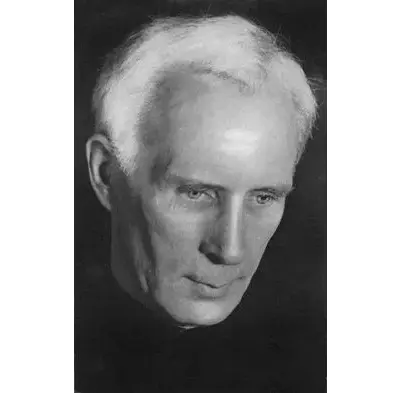
Henri-Marie Joseph Sonier de Lubac SJ, known as Henri de Lubac, was a French Jesuit priest who became a cardinal of the Catholic Church and is considered one of the most influential theologians of the 20th century. His writings and doctrinal research played a key role in shaping the Second Vatican Council.
