Lysander Spooner Quotes
It is perfectly clear, in the first place, that the constitution of the United States did not, of itself, create or establish slavery as a new institution; or even give any authority to the state governments to establish it as a new institution. The greatest sticklers for slavery do not claim this.
Spooner, Lysander. The Unconstitutionality of Slavery. Bela Marsh, 1845, p. 55.


The Federal Fugitive Slave Act required all in free states to assist owners of escaped slaves to return them to their owners. In 1854 a Missouri slave owner tracked his escaped slave to Wisconsin and the Federal officials incarcerated the slave pending his return. A Wisconsin mob broke the slave out of jail and helped him escape to Canada. Sherman M. Booth, Publisher & Editor of the Wisconsin Free Soil Democrat was convicted under the Fugitive Slave Act for aiding the escape. Smith’s opinion overturned the Fugitive Slave Act on the grounds that it had usurped state’s rights. The Supreme Court overturned Smith’s ruling, but Booth was pardoned. See {587927} & {587928}.

In February of 1861, in a last ditch effort to hold the Union together the Senator offered this proposed Constitutional amendment which would not only guarantee the existence of slavery in the South, but would assure that there could be no later Constitutional amendment to do so—the so-called "unamendable amendment." Surprising to us today is the fact that this amendment was not only supported by incoming President Abraham Lincoln, but was passed by the required two-thirds of both houses of Congress. However, before it could be ratified by the States, events overtook the amendment, the South seceded, and the Civil War began.


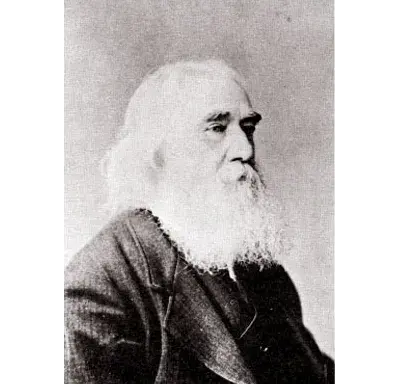
Lysander Spooner was an American individualist anarchist. He was also an abolitionist, entrepreneur, essayist, legal theorist, pamphletist, political philosopher, Unitarian, writer and a member of the First International.
