Charleston Mercury Quotes
The Supreme Court of the United States, in a recent case, has, by a decision of seven to two of the Judges, established as law what our Southern statesmen have been repeating daily for many years on the floors of Congress, that the whole action of this Government on the subject of slavery, for more than a quarter of a century, from the initiation of the Missouri Restriction in 1822, to the California Compromise in 1850, has been all beyond the limits of the Constitution; was without justifiable authority; and that the whole mass should be now proclaimed null and void, and that slavery is guaranteed by the constitutional compact.
Charleston, South Carolina, Mercury, Editorial on the Dred Scott Supreme Court Decision, March 17 1857
Sourced by: Eigen's Political and Historical Quotations


In the wake of the Dred Scott Supreme Court decision, most Northern newspapers and leaders opposed the decision and argued against compliance—especially the Republican newspapers. However, some Northern newspapers were Democratic supporters and argued that the Supreme Court must be obeyed and to oppose the court is to oppose the Constitution itself.

In a 1949 dissenting opinion in Terminiello v. Chicago Jackson claimed the majority view would “convert the Bill of Rights into a suicide pact.”
What makes this quotation so historically interesting is that the abiding by the Supreme Court’s decisions on constitutionality was even an issue. It was because of the terrible Dred Scott decision which required Northern States to return fugitive slaves to their owners despite the constitutions of those states which stated that all men were free. A substantial part of the Democratic Party was the “solid South” and the return of fugitive slaves was one of the major issues of the 1860 Presidential Election. Ironically, the Southern States were arguing AGAINST states’ rights when the Northern States’ laws and Constitutions made fugitive slaves free the minute they set foot in the state.

This quotation is particularly important because it summarizes one of two opposite schools or thought regarding judicial interpretation of the Constitution that politicians have been arguing about since the Supreme Court first sat. The other is Original Intent where only the original intentions of the writers and ratifiers of the Constitution should be considered—assuming that it can be determined.

In June of 1850, a bipartisan group of Southern politicians met in Nashville, TN for the purpose of organizing strategy and tactics to ward off and defeat the growing aggressiveness of Northern politicians and other leaders in trying to abolish slavery. They issued an address to the people. This is one of the clearest statements of the position of most of the Southern Politicians on the increased efforts to abolish or curtail slavery. They felt that a deal had been made by the founding fathers and the first Congress not to deal with the slavery issue, and that deal must be honored in perpetuity. Most Northerners agreed that a deal had been made, but it was not binding forever—that a Congress could not limit the scope of a future Congress except via a Constitutional Amendment. The deal on Slavery was a deal not to address it for a while. It was not a deal to accept the Southern point of view. And none of it was written into the Constitution because opinion was even then split and a majority could not be mustered for a compromise that would write legal slavery into the Constitution. But many Southerners believed that its absence implied that it could not be addressed by the government. They demanded the right of their states to choose slavery if they so wished. Time was not on the side of the South and the Southerners who insisted on State’s Rights regarding slavery opposed States Rights for Northern States who wished to disallow fugitive slaves to be returned to owners. The more fugitive slaves there were, the more hypocritical the Southern position became as they needed Federal preemption on the issue of Fugitive Slaves, else slavery would end by escape and non-return of slaves.

Curtis resigned from the court over the majority opinion.

On the Fugitive Slave Act: As one of the leading American Catholic intellectuals during the 19th Century, Brownson’s opinions went far in keeping Catholics from joining the side of the abolitionists. However, just a few years later his tone would change and he would become one of the few Catholic writers to refuse to defend slavery, see {610710}. While the majority of Catholics refused to join the abolition movement, they often did so because abolitionism was closely tied to anti-Catholicism, see Gordon {611392} or Shaftesbury {611106}. Other reasons included Irish immigrants fearful of competition from Black labor and the fear of liberal individualism and social disorder, which was prevalent in 19th century Catholic thought. For a further explanation on the relationship between American Catholics and slavery, see McGreevy {612036}.


Essentially, Scalia held that it was the job of the legislature to correct evils of society that he felt were not specifically mentioned in the Constitution. Other justices have argued that if the things are so evil and serious that they deny an individual the rights that were mentioned in the Constitutional, then they might be unconstitutional.

There are some Americans who believe that the courts should look to the original intent of the framers of the Constitution to determine the constitutionality of a law. Most jurists believe that original intent is but one factor that should influence the decision.

This was a terrible Supreme Court decision which placed slave owning whites against whites who opposed slavery in conflict over runaway slaves and free blacks throughout the country. It held that Blacks—even free Blacks had no Constitutional rights and was one of the major causes of the Civil War. See {623426}.
When the first Southern States seceded, each appointed a whose job it was to persuade the other Southern States to also secede. In this case Hale was marketing secession to Kentucky which with Maryland were the only two Southern States to reject what they regarded as treason and rebellion. The importance of the quotation however is in his argument which was all based on enmity to racial equality and abolition. Later Southern apologists would argue that the Civil War was fought, not about slavery and racism butt about different philosophies of government. See {623715} .

Note the language used for abolitionists in the years leading up to the Civil War. American voters at that time had always lived with the institution of slavery in America and many thought of it as an institutional pillar of the American nation. Those who wanted to bring down an American institution were “fanatics”. Generally this world is used to describe true fanatics and reformers who want to change anything that has been in existence a long while. To paraphrase Edwin Newman, What words shall we use to describe the zealot who wants to destroy the country when every person who wants to improve and change a facet of our system is called a “fanatic.”

The president was asked if he supported the Supreme court's school desegregation decision:


The FBI had obtained a court order requiring apple to write software that could hack into a person's iPhone. Apple, with most other hi-tech companies in support, filed a motion with the court opposing the order. The FBI shortly thereafter withdrew its request for the order saying that they had found other solutions, when they had originally told the court that there were no other solutions.


The major phrase was first used in a dissent by Justice Robert Houghwout Jackson in 1949 {633526} and later by Chief Justice Earl Warren {601702}

Cummings was arguing against a Constitutional amendment. His alternative led to Roosevelt's court packing schema.
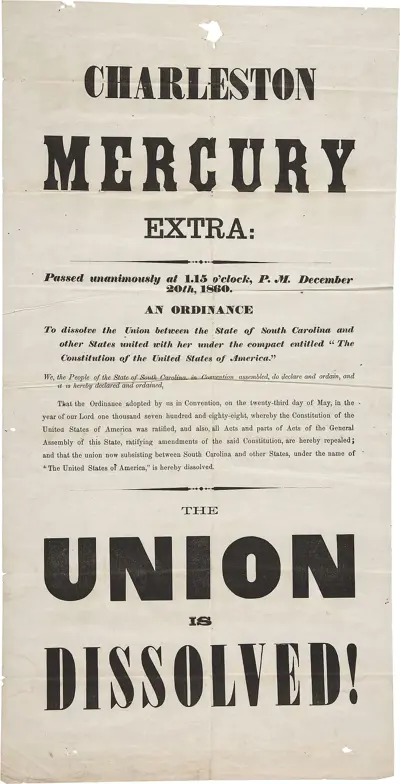
The Charleston Mercury was a secessionist newspaper in Charleston, South Carolina, founded by Henry L. Pinckney in 1819. He was its sole editor for fifteen years. It ceased publication with the Union Army occupation of Charleston. After the American Civil War, publication resumed in November 1866 before the paper closed permanently two years later in 1868.
