CHARLESTON MERCURY
Many Southern Rebels saw themselves as patriots and secession as akin to the Boston Tea Party—the start of a revolution.
This editorial reflected majority Southern political positions of the time. There was never going to be any compromise by ending or curtailing slavery in any way. Amongst the abolitionists, there was an equally rigid view towards compromise. Many Northerners felt that the anti-slavery Americans had been compromising for half a century and slavery was a larger institution that it ever was. They wanted no further compromise. The South had never budged from its original position at the founding of the nation. Historically, it was just a matter of time before there would be a showdown politically and probably militarily. The explosion took 10 more years.
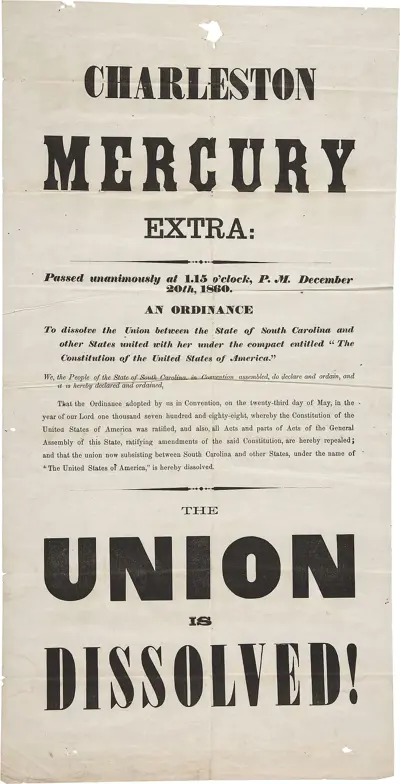
The Charleston Mercury was a secessionist newspaper in Charleston, South Carolina, founded by Henry L. Pinckney in 1819. He was its sole editor for fifteen years. It ceased publication with the Union Army occupation of Charleston. After the American Civil War, publication resumed in November 1866 before the paper closed permanently two years later in 1868.
