Othello Quotes
Far from encouraging the importation of slaves, and countenancing that vile traffic in human flesh; the members of the late continental convention should have seized the happy opportunity of prohibiting for ever this cruel species of reprobated villainy.—That they did not do so, will for ever diminish the luster of their other proceedings, so highly extolled, and so justly distinguished for their intrinsic value
The “late continental convention” referred to the Constitutional Convention in Philadelphia the Constitution there drafted at this point not only failed to come to grips with the slavery issue, but did not even have the Bill of Rights yet. Although many of the delegates wanted to prohibit and/or limit slavery, there was no way to create a Constitution limiting slavery as the Southern states would not countenance it. In a sense, American Constitutional unity was purchased at the price of silence on the slavery issue which was borne by Black Americans ever since,
Othello, ?, Pseudonym for a Free Negro, Essay on Negro Slavery, Published in Baltimore, May 10, 1788
Sourced by: Eigen's Political and Historical Quotations

See the Vermont Constitution for another variant of how slavery was abolished: {616994}

There was a committee proposal to terminate the importation of slaves in 1800. There was a majority for this, but Mr. Randolph proposed that the time be extended to 1808, 20 years thence.


On February 11, 1790 American Quakers submitted a petition to immediately abolish the African slave trade from America. Southerners like Jackson argued that the Congress should not even “consider” such a petition or debate such as subject for if it did, that per se, would imply the possible consideration of emancipation, and if that were possible, they would be on the slippery slope toward emancipation of existing slaves which would be the end of the world as the Southern whites then knew it.


His family was one of the wealthiest in Rhode Island. He called in the entire family and he formally read the deed. The family itself had actually been active in the slave trade under John, his oldest brother, so this deed was very shocking to them. Moses became a leading abolitionist in Rhode Island and John the major defender of slavery in the state. Despite that, the brothers actually remained close.

He was also himself a ship owner in the slave trade and he was the brother of the leading Rhode Island abolitionist, Moses Brown. See {585793}. Brown became the first American, prosecuted in federal court for illegal slave trading –-- a prosecution brought, in part, by his own brother. He was, however, acquitted.

This was Lincoln’s first anti—slavery speech and it was memorable

Many people are surprised that such an anti-slavery could have passed given the Southern states’ position regarding slavery. However, this resolution did not end slavery—just American participation in the slave trade. This would have actually increased the value of the existing slaves in the colonies as “cheap imports” would no longer depress the value of American slaves. The Southern perception was there were enough slaves for their needs and they could breed more. The other states, generally opposing slavery took what they could get---a ban on the slave trade. A major economic fact of the time was the vast majority of the slave trade imports were going to the British Colonies in the Caribbean. Cutting off the American slave trade would do much more harm to the economic interests of Britain than the United States where the only people economically hurt would be the Yankee captains and slave traders who were not very popular of politically connected except in Rhode Island.


The highest court in New York.
Lincoln presciently wrote this statement in 1858, for he would be assassinated on April 14, 1865, eight months prior to the final ratification of the 13th Amendment.

Benezet was a Huguenot whose family had been persecuted in France. He identified with the cause of Blacks, Indians and Acadians. He was also one of the first leaders of the American Peace Movement.

The first anti-slavery newspaper published in the United States & the first journal in America to advocate immediate, unconditional emancipation

This editorial reflected majority Southern political positions of the time. There was never going to be any compromise by ending or curtailing slavery in any way. Amongst the abolitionists, there was an equally rigid view towards compromise. Many Northerners felt that the anti-slavery Americans had been compromising for half a century and slavery was a larger institution that it ever was. They wanted no further compromise. The South had never budged from its original position at the founding of the nation. Historically, it was just a matter of time before there would be a showdown politically and probably militarily. The explosion took 10 more years.


Even before we had a Constitution there was major opposition to slavery. The “price” of the American Union was the acceptance of the slavery of the South. But the hypocrisy of a country based on liberty to allow and enforce slavery was not lost on the founding fathers. Ironically the abolitionists among the founding fathers were certain that they could persuade the Southern slaveholders of the error of slavery in a few years and things would be set right in the land. Even George Washington {630626}, and Thomas Jefferson and some other slaveowners at the time wished to see its abolition. Slaveholding Southern Founding Fathers in general were so wary of the abolitionists that they achieved structural, disproportionate, power in the new Constitution to ward off the abolitionists attempts to reform slavery.

This clause was superseded by the 13th Amendment {621373}. More and more abolitionists were refusing on ethical and moral grounds to return fugitive slaves. Some states actually passed laws forbidding the return of fugitive slaves and freeing them the second they set foot in the state. Some objected arguing that the law must be enforced and the Constitution obeyed. They had a point, so the solution was to change the Constitution which is what was done in 1865.
His opposition to slavery focused on the breakup of families and leaving the elderly, weak and inform to die. His view was similar to that of William Pitt.

It was in fact, the following year when the South rebelled to prevent a “settlement”, but the irony was that the Civil War brought the settlement—emancipation-- faster and on less favorable terms than had they not rebelled and let the political process end slavery gradually as the majority of the nation wanted and morality dictated.
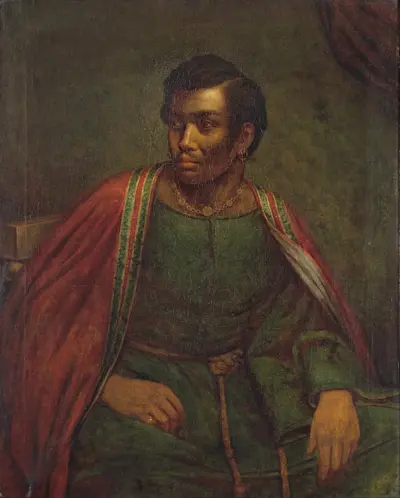
Othello (The Tragedy of Othello, the Moor of Venice) is a tragedy by William Shakespeare, probably written in 1603.
