CONTINENTAL CONGRESS
The New England and Middle Atlantic States had recruited and allowed Negroes to serve in their divisions with excellent results. These two Southern states were suffering badly as a result of the British Military dominance and atrocities. Almost all whites who were patriots were already under arms. Hence the recommendation. Despite their precarious position, the Southern States would not follow the recommendation. Many were convinced that the Blacks would never make good soldiers, and the those Southerners who disagreed were terrified that once armed, the Blacks would never submit to slavery and would support slave insurrections of the Black slaves who were not in the military.
The broad charter given Washington is a model that all American military commanders have envied since.
This resolution of independence was voted upon a month before the Declaration of Independence. It was approved by 12 of the colonies but not by New York. The Congress appointed a committee to draft what became the Declaration of Independence and that was approved by all the colonies. The resolution was introduced by Richard Henry Lee on instructions from Virginia. The graphic is of Lee’s original notes.
The purpose was to try and get the king and parliament not to enforce the Stamp Act in the colonies. The delegates had to thrash out the language and it was important to flatter the king and parliament. While some delegates felt that loyalty to the mother country, many others thought that the king and parliament had betrayed them and thought this language gross hypocrisy. See {589426} for one delegate’s description of the difficulty.
There was, well before the American Revolution, a restriction on the importation of British goods into the American colonies. Partially this was to pressure Parliament to stop some of its most repressive lawmaking. But it also supported what had become a very lucrative protectionist monopoly of large American merchants. See {636861}.
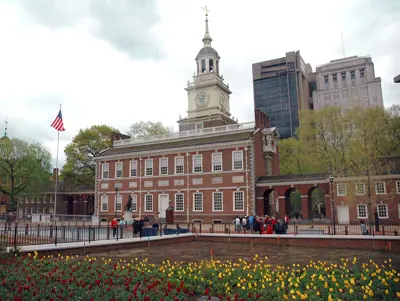
The Continental Congress was a series of legislative bodies which met in the British American colonies and the newly declared United States just before, during, and after the American Revolution. The term "Continental Congress" most specifically refers to the First and Second Congresses of 1774–1781 and may also refer to the Congress of the Confederation of 1781–1789, which operated as the first national government of the United States until being replaced by the current congress. Thus, the term covers the three congressional bodies of the Thirteen Colonies and the new United States that met between 1774 and 1789.
