Continental Congress Quotes
Whereas all particulars cannot be foreseen, nor positive instructions for such emergencies so before hand given but that many things must be left to your prudent and discreet management, as occurrences may arise upon the place, or from time to time fall out, you are therefore upon all such accidents or any occasions that may happen, to use your best circumspection and (advising with your council of war) to order and dispose of the said Army under your command as may be most advantageous for the obtaining the end for which these forces have been raised, making it your special care in discharge of the great trust committed unto you, that the liberties of America receive no detriment.
The broad charter given Washington is a model that all American military commanders have envied since.
Continental Congress, Instructions to General Washington; June 20, 1775
Sourced by: Eigen's Political and Historical Quotations

Not understanding this point has been the cause of much difficulty for military leaders from the war of 1812 through the Iraq war, the success or failure of the effort depended on a successful peace.

During the Civil War, General Joseph Hooker castigated the President and called for a dictator to assume power:


He later provided a copy to Hezekiah Niles, February 5, 1819 which is the source of the quotation since Henry never mentioned it.

Ironically, Lieberman was using this quotation to campaign against Bush’s son, George W. Bush.


Clark had commanded the American and NATO forces in the Serbian War where all the military and political objectives were accomplished with heavy losses to the Serbian’s and none to the allied side—what many think was the most successful war in American History. Like Eisenhower in WWII one great challenge for Clark was the political and strategic one of keeping the coalition of all the allied governments working together. His perspective had been like Eisenhower’s and other officer’s perspectives in history, which was much wider and geopolitical than the views of most military officers.


1st Earl Baldwin of Bewdley. Though members of the same Conservative Party, Churchill was a major opponent of Baldwin’s peace and “appeasement” efforts and publicly castigated Prime Minister Baldwin. Yet Baldwin, if he could not stave off war, wanted his critic to serve as Prime Minister if war was inevitable. Churchill never had much respect for Baldwin. See {626930}.


The President told McNamara that if the administration does not send the troops the Generals want, they will be blamed for any military failures that occur. If they do send all the troops that the Joint Chiefs wanted, they would be going far beyond the limits that the Defense Secretary recommended and the President would have preferred. JBJ felt he really had no political choice. He authorized the wanted troops further escalating the war. See his special assistant’s question about that decision in {617151}.


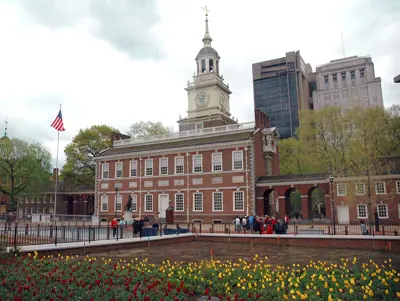
The Continental Congress was a series of legislative bodies which met in the British American colonies and the newly declared United States just before, during, and after the American Revolution. The term "Continental Congress" most specifically refers to the First and Second Congresses of 1774–1781 and may also refer to the Congress of the Confederation of 1781–1789, which operated as the first national government of the United States until being replaced by the current congress. Thus, the term covers the three congressional bodies of the Thirteen Colonies and the new United States that met between 1774 and 1789.
