Continental Congress Quotes
We will neither import nor purchase, any slave imported after the first day of December next; after which time, we will wholly discontinue the slave trade, and will neither be concerned in it ourselves, nor will we hire our vessels, nor sell our commodities or manufactures to those who are concerned in it.
Many people are surprised that such an anti-slavery could have passed given the Southern states’ position regarding slavery. However, this resolution did not end slavery—just American participation in the slave trade. This would have actually increased the value of the existing slaves in the colonies as “cheap imports” would no longer depress the value of American slaves. The Southern perception was there were enough slaves for their needs and they could breed more. The other states, generally opposing slavery took what they could get---a ban on the slave trade. A major economic fact of the time was the vast majority of the slave trade imports were going to the British Colonies in the Caribbean. Cutting off the American slave trade would do much more harm to the economic interests of Britain than the United States where the only people economically hurt would be the Yankee captains and slave traders who were not very popular of politically connected except in Rhode Island.
Continental Congress, Resolution, October 20, 1774
Sourced by: Eigen's Political and Historical Quotations


The British Consul was attempting to implement the British government’s new anti-slavery policy.

The first anti-slavery newspaper published in the United States & the first journal in America to advocate immediate, unconditional emancipation

In April, 1784, the Continental Congress passed a series of laws that Jefferson had drafted for the NorthWest territory—Ohio then being the west and the states that would develop there. However, the quotation is the clause that the Southern States blocked and hence did not become law, as the Soothers states cared little about the status of the area regarding slavery, but feared that the new states wold become a sanctuary for runaway slaves. It was another case where Jefferson attempted to end slavery. It also was yet another example of the unwieldiness of the Continental Congress to manage the new nation which led up to the Constitutional Convention of 1787. Ironically, as a price for union, the Southern States demanded and obtained a disproportionate representation in the New House of Representatives by having 60 percent of their slaves counted inzallocating congressional seats. The senate also worked in their favor as there were enough Southern states to block any attack on slavery in the Senate. There was no democratic way to eliminate slavery and the Civil War resulted. However, Jefferson’s proposed law was passed by the last Continental Congress in June, 1787. The difference was that there was also added a proviso that required the return of all runaway slaves from the new territory and states which was lacking in the earlier attempt.


The Brown family were very wealthy. John was involved in many speculative enterprises, owned slaves, and had been in the slave trade, and then it had been outlawed in large part by the efforts of his brother, Moses Brown who was a staunch abolitionist and an officer of the Rhode Island Abolition Society. The quotation is important because one theory is that the only reason that the slave trade became illegal was because it was not very profitable due to the high cost and loss ratio and the competition from slaves who were born of slave mothers. So the slave trade was outlawed but not slavery which was so profitable. However, this quotation illustrates how profitable the slave trade was and the early legislation was therefore motivated by ethical and moral concerns.
He was also himself a ship owner in the slave trade and he was the brother of the leading Rhode Island abolitionist, Moses Brown. See {585793}. Brown became the first American, prosecuted in federal court for illegal slave trading –-- a prosecution brought, in part, by his own brother. He was, however, acquitted.

His family was one of the wealthiest in Rhode Island. He called in the entire family and he formally read the deed. The family itself had actually been active in the slave trade under John, his oldest brother, so this deed was very shocking to them. Moses became a leading abolitionist in Rhode Island and John the major defender of slavery in the state. Despite that, the brothers actually remained close.

As late as 2005 Saudi Arabia was officially listed by the State Department as trafficking in women for sexual exploitation and domestic servitude.

After the civil war there was a concerted effort to shape American opinion away from the notion that the Civil War has mainly about slavery which we now know was a false notion. Slavery was the only significant issue for both sides. This quotation is cited by many who argue that the prospect of the end of slavery was tantamount to economic confiscation and impoverishment for the slave owning minority and hence it drove them to rebellion. Also, Davis and others argue that the value of the slaves was so great that there was no possible economic way to compensate the slave owners for emancipation at fair market value which was why that “compromise” never went anywhere.


Baldwin was a young lawyer at the time. He represented a shipload of ex-slaves who had taken over their Spanish slave ship and landed in America. The Spanish claimed, the ship owners and some of the crew all claimed the “property.”

This was one of the first steps to ending of slavery in England. The council passed a number of general reforms from this to the prohibition of the clergy frequenting ale houses.

On February 11, 1790 American Quakers submitted a petition to immediately abolish the African slave trade from America. Southerners like Jackson argued that the Congress should not even “consider” such a petition or debate such as subject for if it did, that per se, would imply the possible consideration of emancipation, and if that were possible, they would be on the slippery slope toward emancipation of existing slaves which would be the end of the world as the Southern whites then knew it.

The slavery issue was the dominant issue in pre-Civil War America. It even drove foreign policy.

There was a committee proposal to terminate the importation of slaves in 1800. There was a majority for this, but Mr. Randolph proposed that the time be extended to 1808, 20 years thence.
Most of us think the California was not a slave state, but in the early 1850s the California law (such as it was) allowed a slave owner to “sojourn” in California with his property that could include slaves. A number of Southern save owners took slaves to the California gold fields to do mining. There was a great deal of resentment on the part of the other miners and the free labor of the territory. In 1855, slavery in California was abolished.
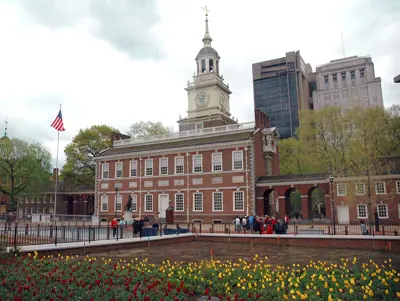
The Continental Congress was a series of legislative bodies which met in the British American colonies and the newly declared United States just before, during, and after the American Revolution. The term "Continental Congress" most specifically refers to the First and Second Congresses of 1774–1781 and may also refer to the Congress of the Confederation of 1781–1789, which operated as the first national government of the United States until being replaced by the current congress. Thus, the term covers the three congressional bodies of the Thirteen Colonies and the new United States that met between 1774 and 1789.
