Albert G. Brown Quotes
I want Cuba ... I want Tamaulipas, Potosi, and one or two other Mexican States; and I want them all for the same reason -- for the planting and spreading of slavery
The slavery issue was the dominant issue in pre-Civil War America. It even drove foreign policy.
Albert Gallatin Brown, 1813-1880, U. S. Senator (Democrat, MS), His unusual justification of expansionism, Quoted in James M. McPherson, Battle Cry of Freedom
Sourced by: Eigen's Political and Historical Quotations


Van Buren was Ambassador to England at the time.

Secession of the South was not a new idea stimulated by the election of Abraham Lincoln. Fully 10 years before, there was this plan to form a Slave state union which would expand into Mexico and the Caribbean.

Louisiana to this day has a different legal system from the rest of the United States as it was originally based on the French Napoleonic Code. Most people did not realize that Louisiana had strictures against breaking up families—even with slaves.

Many people are surprised that such an anti-slavery could have passed given the Southern states’ position regarding slavery. However, this resolution did not end slavery—just American participation in the slave trade. This would have actually increased the value of the existing slaves in the colonies as “cheap imports” would no longer depress the value of American slaves. The Southern perception was there were enough slaves for their needs and they could breed more. The other states, generally opposing slavery took what they could get---a ban on the slave trade. A major economic fact of the time was the vast majority of the slave trade imports were going to the British Colonies in the Caribbean. Cutting off the American slave trade would do much more harm to the economic interests of Britain than the United States where the only people economically hurt would be the Yankee captains and slave traders who were not very popular of politically connected except in Rhode Island.


As a young boy, Moyers lived and went to school in Texas where the state has control over all the schools’ curricula and slavery was taught about with little reality.

Most of us think the California was not a slave state, but in the early 1850s the California law (such as it was) allowed a slave owner to “sojourn” in California with his property that could include slaves. A number of Southern save owners took slaves to the California gold fields to do mining. There was a great deal of resentment on the part of the other miners and the free labor of the territory. In 1855, slavery in California was abolished.
He was not correct that all sects and nations have agreed that slavery is desirable. The Jews escaping from Egypt, the early American and British religious sects that were strong abolitionists were examples. However, there were relatively few exceptions and generally, the Sultan had it right.

In this case, the Pope was obeyed on the issue of slavery. However, Papal injunctions against slavery have not always had the desired effect. See {617632}


See the Vermont Constitution for another variant of how slavery was abolished: {616994}

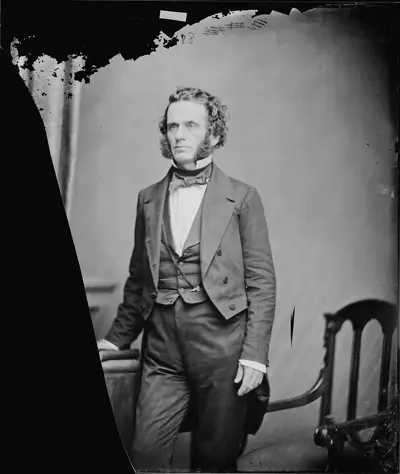
Albert Gallatin Brown was Governor of Mississippi from 1844 to 1848 and a Democratic United States Senator from Mississippi from 1854 to 1861, when he withdrew during secession.
