EUGENE IV
(Pope Eugene IV)
In this case, the Pope was obeyed on the issue of slavery. However, Papal injunctions against slavery have not always had the desired effect. See {617632}
This bull was issued to Bishop Ferdinand located at Rubicon on the island of Lanzarote. Many critics of the Catholic Church point to the widespread use of slavery by Catholic laity and even the clergy during the Age of Discovery. It is clear, however, from the earliest appearance of slavery during this period that the official teaching of the Church condemned it as a crime subject to the sentence of excommunication ipso facto (by the very deed itself). The Church’s condemnation of “slavery,” however, did not extend to “just title” slavery, which approved of the practice in circumstances in which the person was deprived of their liberty justly. Specific examples have included slaves captured in war, persons condemned to slavery for a crime, and those who sold themselves into slavery. For an example of a type of “just title” slavery being legitimatised, see Nicholas V {612174}. In many cases the line between slavery for no morally justifiable reason, i.e. racial slavery, and “just title” slavery remained unclear to Catholic laity and clergy alike.
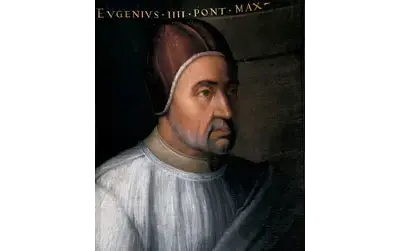
Pope Eugene IV, born Gabriele Condulmer, was head of the Catholic Church and ruler of the Papal States from 3 March 1431 to his death. Condulmer was a Venetian, and a nephew of Pope Gregory XII. In 1431, he was elected pope. His tenure was marked by conflict first with the Colonnas, relatives of his predecessor Martin V, and later with the Conciliar movement. In 1434, due to a complaint by Fernando Calvetos, bishop of the Canary Islands, Eugene IV issued the bull "Creator Omnium", rescinding any recognition of Portugal's right to conquer those islands, still pagan. He excommunicated anyone who enslaved newly converted Christians, the penalty to stand until the captives were restored to their liberty and possessions. In 1443 Eugene decided to take a neutral position on territorial disputes between Portugal and Castile regarding rights claimed along the coast of Africa.
