JAMES JACKSON
The States sold bonds to finance the Revolutionary War. Some states had better prospects for redeeming their bonds than others. Georgia, South Carolina and North Carolina in particular had poorer prospects than most and their bonds were selling at about 25 cents on the dollar. Alexander Hamilton, then the Secretary of the Treasury, wanted the new Federal government to assume the state’s war debt and pay off the bonds. He made his proposal for how he would accomplish this on January 14, 1790. He delivered his report and proposal to Congress “Report on the Public Credit”. As soon as Hamilton’s proposal was read in Congress, sophisticated speculators set off for the Southern States to buy up as many bonds as they could before the owners found out that a Federal bail-out was under serious consideration. They could easily double, triple or even quadruple their money. To Jackson this was gross immorality. Other representatives had a different point of view. See {619928} & {619939}.
From the very beginning of our country, argumentem ad hominem, attacking the credentials of the opponent, has been a basic debating technique of diverting attention from the issue and onto the protagonist
On February 11, 1790 American Quakers submitted a petition to immediately abolish the African slave trade from America. Southerners like Jackson argued that the Congress should not even “consider” such a petition or debate such as subject for if it did, that per se, would imply the possible consideration of emancipation, and if that were possible, they would be on the slippery slope toward emancipation of existing slaves which would be the end of the world as the Southern whites then knew it.
The metaphor of the “ship of state” was very common for governments of the era when basic nautical concepts were known to most educated people.
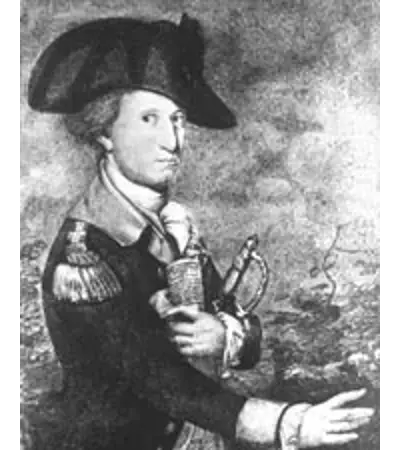
James Jackson was an early British-born Georgia politician of the Democratic-Republican Party. He was a member of the U.S. House of Representatives from 1789 until 1791. He was also a U.S. Senator from Georgia from 1793 to 1795, and from 1801 until his death in 1806. In 1797 he was elected 23rd Governor of Georgia, serving from 1798 to 1801 before returning to the senate.
