Continental Congress Quotes
We esteem our connection with and dependence on Great Britain as one of our greatest blessings; and apprehend the latter will be sufficiently secure, when it is considered that the inhabitants in the colonies have the most unbounded affection for his majesty’s person, family and government, as well as the mother country, and that the subordination to the parliament is universally acknowledged.
The purpose was to try and get the king and parliament not to enforce the Stamp Act in the colonies. The delegates had to thrash out the language and it was important to flatter the king and parliament. While some delegates felt that loyalty to the mother country, many others thought that the king and parliament had betrayed them and thought this language gross hypocrisy. See {589426} for one delegate’s description of the difficulty.
Continental Congress, Petition to the King and Parliament, October 24, 1765
Sourced by: Eigen's Political and Historical Quotations

The Stamp Act had caused much consternation among the colonies. The Continental Congress had gone into session to draft a petition to the King asking that the Act not be enforced. This letter described the chalenge before them. See {589421} for one of the more contentious passages the delegates had to work out.

This resolution was the trigger that began the debate which became the Declaration of Independence.


Americans were by no means united in wanting to take up arms against Britain. Relatively few of the loyalist quotations have come down to us, but here is one. It also illustrates why some Americans wanted complete independence: So that they could escape their debts to English merchants. Most however had more noble and unselfish motives. As a matter of fact, the American Revolution is unusual in the sense that there were so many men of substance who sacrificed much of their material wealth for the American ideal. There were also the rogues and opportunists as Galloway describes.

The revolutionary acts from some of the more radical colonists but the colonial power structure was trying to negotiate for changes from the taxation and rights-impinging laws that Parliament had passed. Within a year the Continental Congress would take a more revolutionary position when this petition yielded no betterment-- {636864} and {636958}.


Germany had been Turkey’s traditional ally so this was another of his radical changes—tilting toward Britain.

1st Earl Baldwin of Bewdley. Queen Victoria's birthday


While Adams was a little hyperbolic in his claim, the vast majority of the colonists who were protesting British policy and administration in 1775 were seeking reform, not separation from England. But what a difference a year made! British reaction radically changed the objectives of most colonists. See George Washington {613171} for a similar view.


“Picaninnies” is a derogatory term for Blacks.


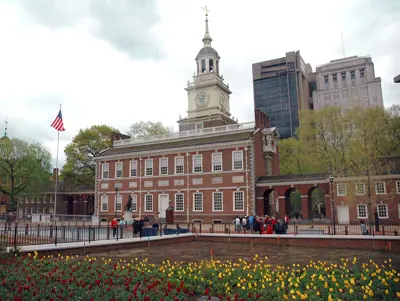
The Continental Congress was a series of legislative bodies which met in the British American colonies and the newly declared United States just before, during, and after the American Revolution. The term "Continental Congress" most specifically refers to the First and Second Congresses of 1774–1781 and may also refer to the Congress of the Confederation of 1781–1789, which operated as the first national government of the United States until being replaced by the current congress. Thus, the term covers the three congressional bodies of the Thirteen Colonies and the new United States that met between 1774 and 1789.
