John F. Kennedy Quotes
… with the stroke of a pen.
John F. Kennedy, 1917-1963, 35th President of the United States (Democrat, MA), Description of how he would end housing segregation in America, Campaign Speech, 1960
Sourced by: Eigen's Political and Historical Quotations


Alberto Gonzalez, White House Counsel and later Attorney General who was forced to resign and David S. Addington, Counsel to the Vice President, had come up with a novel view of the powers of the presidency. They argued that since the President is the Commander in Chief, in a war situation or intelligence gathering thereto, has the Constitutional responsibility for that function, he need not obey any laws of Congress as in the conduct of the war Congress would be impinging on the Constitutional separation of powers which itself was prohibited by the Constitution. The argument did not find any significant legal support but for a while the George W. Bush White House behaved as if this were the law, despite the fact that even in the American Revolution and the War of 1812 Congress passed laws regulating the conduct of the armed forces as is provided for in other parts of the Constitution. Yet even Goldsmith would allow the President some powers that many think are unconstitutional and/or belong to Congress. See {32436}.


He supported the Presidential concept as the least worst option.


Referring to President Bush's winning a roll-call vote in the House on lowering the capital gains tax:


See {635809} for an additional view on this act.


Early in the Donald Trump Presidency, some of his first decisions, including his Anti-Muslim ban on immigration and vistitation from 7 Islamic nations, were very distrubing to amy politicians experienced in national security and defense. 100 leaders from past adminsitrations, Democratic and Republicans, signed a petition warning that the travek ban endangered our national security. Then 1000 U. S. State Department Diplomats signed a letter advising the President to recind the order for similar reasons. Malinowski was asked if this kind of opposition to a new presidents actions was unusual. This quotation was his reply. Not the use of sarcasim. He states what happened in very stark terms and then says that it is not unusual and there is notjing to worry about, when it was withotu precedent ever and very worrisome to him and others. Quotations using sarcasim are very problimatical becasue just a literal reading, would lead us to believe he was not concened with sich a common occurance.


John Foster Dulles was the Secretary of State and brother Allen Dulles was head of the CIA.


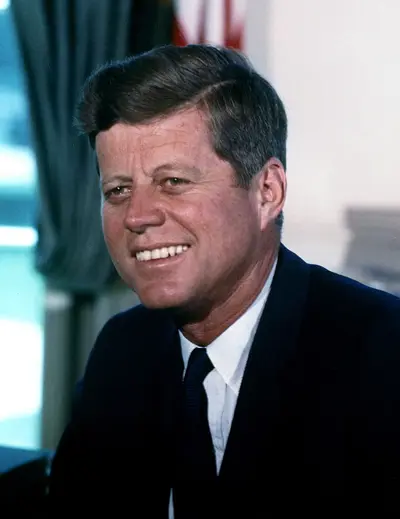
John Fitzgerald Kennedy, often referred to by his initials JFK, was an American politician who served as the 35th president of the United States from 1961 until his assassination in 1963. Kennedy served at the height of the Cold War, and the majority of his work as president concerned relations with the Soviet Union and Cuba. A Democrat, Kennedy represented Massachusetts in both houses of the U.S. Congress prior to becoming president.
