Mujibur Rahman Quotes
You are the President of this country. Come to Dhaka, come and see how our poor Bengali people have been mown down by your bullets, how the laps of our mothers and sisters have been robbed and left empty and bereft, how my helpless people have been slaughtered. Come, I said, come and see for yourself and then be the judge and decide
Bangladesh was a part of Pakistan that was treated as a second class area by the Pakistan government. Some Bengalis in Dhaka demonstrated in protest and many were murdered by the Pakistani military and security forces. Rahman called on the government to right the situation. Nothing happened and finally Bangladesh revolted and gained their independence.
Mujibur Rahman, 1920–1975, Founder & President of Bangladesh, Party Leader of the Pakistan & Bengali Awami League,, Statement to Yahya Khan, the President of Pakistan which then contained Bangladesh
Sourced by: Eigen's Political and Historical Quotations

First Published American Indian Author. His last public speech. He was referring to a horrible massacre of Christian Indians and the polarizing effect that such conflicts had. Whosoever publicly castigated a massacre of whites or Indians would be met by accusations of condoning the massacres of the other side and ignoring the inevitable and natural seeking of retaliation for future protection and revenge.

Jinnah and other Muslim leaders had stirred up the Muslims to violence to put pressure on all the parties to accede to Jinnah's Muslim League's demand of an independent Muslim nation—Pakistan. Messervy was very sympathetic to the Muslim leadership as he had been feuding with and frustrated by the predominantly Hindu ruling Congress Party. After partition he accepted the mercenary position of Commander in Chief of the Pakistani Army. Then he was shocked and horrified at the slaughter of the terrorist attacks by the Muslims—about 4,000 Sikh men, women and children had been beaten and cut to death. The Sikhs had been targeted largely because Sikh leaders had recently announced that if there were a Partition, Sikhs would refuse to live in nation under Muslim control.


The Armenian-Turkish enmity was vicious to the point that each people tried to kill and exterminate the other—men women and children. The atrocities committed by the Armenians were unfortunately matched by the Turks in what is now referred to as the “Armenian Genocide”—see {51838} The armed combatants amongst Turks and Armenians were in the minority yet each side slaughtered all members of the other whenever they could. The hatred still prevails – see {588211}. And Turks and Armenians both still accuse the other of atrocities of the period and appear in denial about their own violence.


See Ferdinand I for the Bulgarian denial {601322}.


When any government of police de[artment overreacts in the West, it becomes propaganda for most of the autocracies in the world who generalzie from the incidents and conclude that the west is holdign them to a stadard that they West does really not believe in or follow.

Bashir Assad responded to some peaceful protests triggered by the Arab Spring throughout the Middle East by allowing his security forces to shoot unarmed demonstrating civilians and shelling with artillery to and apartment buildings of neighborhoods where there were large numbers of demonstrators. So many thousands of civilians were liked that the protestors, who initially only wanted more freedom, also demanded Assad’s resignation and his trial for war crimes by the World Court. Baker did not think that Assad could hold power very much longer.

This quotation distressed many ultra rightists who otherwise were avid followers of Mises. See {632407} for another quotation that distressed many European conservative devotees of Mises.

Hoover was at that time in charge of War Relief in Europe. The Christian Armenians, a minority in Turkey and its lands, were discriminated against like other non Muslim minorities in the Ottoman Empire. But during the Turkish War with Russia and WWI, some Armenians defected and served on the Russian side. Many Turkish citizens took revenge on Armenians by means of murder and torture. Soon, the extermination of the Armenians became the official “Young Turk” government policy. Hundreds of thousands of Armenians were killed outright, and about an equal number were “deported” to special areas. Many died of malnutrition along the forced march of Ethnic Cleansing. Others were murdered as they were deported. No one knows exactly how many Armenians were killed with estimates ranging from ½ million to 4 million. This was the first genocide of the 20th century. Modern Turkish leaders however, are in denial about the Armenian deaths. They claim that there was a war and food was scarce; the only Armenians killed, they claimed were proven Russian agents. They further claim that the Armenian behavior was in large part responsible for the forced deportations because of their lack of patriotism and unwillingness to help the Turkish authorities identify the Russian agents. Most Turks today are unaware of the Armenian Genocide as nothing is taught about the massacres in schools or other institutions. It is against the law in Turkey to even have an intellectual study group of the Turkish behavior towards the Armenians, much less publish anything about it.


A Cossack revolt had broken out in 1707 and was put down by the Czar’s forces. He then issued what might be one of the first official orders for genocide. Few Cossacks survived.


Saloth Sar Pol Pot. He was responsible for the brutal killing of over 1 million of his own people.
This was part of the continual conflict between the Muslims and the Eastern Orthodox Christians. The Greeks ended up doubling their territory.


While there is often considered to have been only one Holocaust, the headline Another Armenian Holocaust implies there were multiple holocausts in Armenia
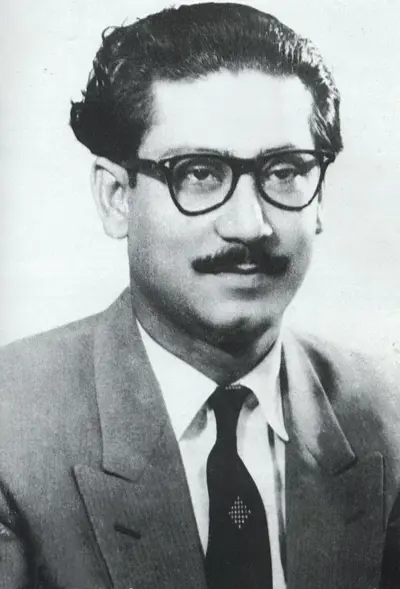
Sheikh Mujibur Rahman, shortened as Sheikh Mujib or just Mujib, was a Bangladeshi politician and statesman. He is called the "Father of the Nation" in Bangladesh. He served as the first President of Bangladesh and later as the Prime Minister of Bangladesh from 17 April 1971 until his assassination on 15 August 1975. He is considered to be the driving force behind the independence of Bangladesh. He is popularly dubbed with the title of "Bangabandhu" (Bôngobondhu "Friend of Bengal") by the people of Bangladesh. He became a leading figure in and eventually the leader of the Awami League, founded in 1949 as an East Pakistan–based political party in Pakistan. Mujib is credited as an important figure in efforts to gain political autonomy for East Pakistan and later as the central figure behind the Bangladesh Liberation Movement and the Bangladesh Liberation War in 1971. Thus, he is regarded as "Jatir Janak" or "Jatir Pita" (Jatir Jônok or Jatir Pita, both meaning "Father of the Nation") of Bangladesh. His daughter Sheikh Hasina is the current leader of the Awami League and also the Prime Minister of Bangladesh.
