Timothy Pickering Quotes
WHEREAS, in the late war between Great-Britain and the United States of America, a body of the Oneida and Tuscorora and the Stockbridge Indians, adhered faithfully to the United States, and assisted them with their warriors; and in consequence of this adherence and assistance, the Oneidas and Tuscororas, at an unfortunate period of the war, were driven from their homes, and their houses were burnt and their property destroyed: And as the United States in the time of their distress, acknowledged their obligations to these faithful friends, and promised to reward them: and the United States being now in a condition to fulfill the promises then made: the following articles are stipulated by the respective parties for that purpose
See {612285} also for the specific payments to the Indians. The other tribes of the Iroquois nation had allied themselves with the English. See {583726}. Only the Oneida joined the colonist cause. At the end of the war, the other Iroquois tribes were run out of the country and they escaped to Canada. The Oneida, in contrast, were rewarded by the Federal government and integrated into New York State society.
Timothy Pickering, 1745-1829, U. S. Congressman & Senator (Federalist, MA), Postmaster General, Secretary of War, Secretary of State, Treaty between the United States and the Oneida, Tuscorora and Stockbridge Indians, 1794
Sourced by: Eigen's Political and Historical Quotations

The purpose was to persuade the Iroquois Indians to stay neutral in the coming conflict with England. Iroquois had traditionally traded peaceably & on many occasions the colonists & Iroquois had fought against the French and other Indians. The colonists appealed to their strong sense of fairness--{610960}. A Mohawk chief, Joseph Brant, had traveled to England and been educated there. He persuaded 5 of the Iroquois tribes to join the obvious winner—England. Only the Oneida joined the revolutionists. The result was a civil, fratricidal war of not only white, but also of Iroquois who had been at peace with each other since any could remember. When the colonists won, the Oneida were warmly embraced and participated in colonial life and activities. (A little over 200 years later the average earnings of the Indian in New York State exceeded that of the average white.) The other 5 Iroquois tribes however were driven from their traditional lands. They fled with Joseph Brant to English Canada.

The rationale for paying these Indians was given in the beginning of the treaty. See {612283}. In addition the treaty provided for the Federal government to build a flour mill and a saw mill and provide technical staff to operate and maintain them. In an interesting gesture the Federal government rebuilt a church that had been the house of worship for some Oneida Presbyterians. The English and the other Iroquois had burned the church to the ground. See {621968}. This is one of the few times in history, and certainly the first time, that the Federal government constructed a church for a particular sect. The other tribes of the Iroquois nation had allied themselves with the English. See {583726}. Only the Oneida joined the colonist cause. At the end of the war, the other Iroquois tribes were run out of the country and they escaped to Canada. The Oneida, in contrast, were rewarded by the Federal government and integrated into New York State society.


There is disagreement amongst historians as to whether or not the atrocities attributed to the retreating British troops were actually true. There are two other possibilities. First, this report was made only a week after the battle itself and less than that since the alleged atrocities would take place as the British retreated. There were certainly all kinds of rumors with information passed from person to person with no modern means of documentation. The Provisional Congress may have sincerely thought that all the events occurred but they may have been the result of inadvertent exaggeration. Then there is the possibility that in order to fire up the Americans to join the war, some or all of the atrocity reports were deliberately fabricated. It would only take two or three delegates to agree on such a strategy and they could “confirm” each other’s accounts of the happenings. Of course it might all be true. However, as the British retreated to Boston where they had reinforcements, they did not have a lot of time for malicious atrocities. All along the route, Minutemen, local farmers and townspeople continued the attack against the British. By the time the British soldiers reached Boston, 73 British solders were dead and 174 more were wounded. In war truth does not have the respect that it usually does. See {626632}.

Hull surrendered a few days later.
This speech was officially prepared and read to the six Indian tribes of the Iroquois Nation. The purpose was to persuade the Iroquois Indians to stay neutral (see {583726}) in the coming conflict with England. The Iroquois had traditionally traded peaceably with the colonists and on many occasions the colonists and the Iroquois had fought against the French and other Indians. Unfortunately, a Mohawk chief, Joseph Brant, had traveled to England and been educated there. He, following the conventional wisdom of the day persuaded most of the Iroquois tribes to join the obvious winner—England—and fight on their side. Only the Oneida tribe resisted Brant’s advice, and joined the revolutionists. The result was a civil, fratricidal war of not only white, but also the Iroquois Indians who had been at peace with each other since any could remember. When the colonists won, the Oneida were warmly embraced and participated in New York and other colonial life and activities. The relationship was so good that a little over 200 years later the average earnings of the Indian in New York State exceeded that of the average white man. The other 5 Iroquois tribes however were attacked and driven out of their traditional territories and they fled with Joseph Brant to English Canada where they have not yet fully recovered their important place in the society.


The whites had constantly encroached on the Cherokee land which was too large for any reasonable patrolling by the Indians themselves. The Federal government persuaded the Cherokee to sign a treaty by which the Indians would give up their title to the larger part of their land. The most important quid pro quo was that the Federal Government would protect the remainder of the Cherokee land from incursion by whites or even other Indians. However, whites who coveted the land started to encroach and build farms and ranches. The Federal government was reluctant to use American soldiers against American citizens and was looking for a way out. However, the Cherokee chiefs were reminding them of their obligation. The state governments were less concerned about Federal treaties, and Georgia passed a law that said that all the Cherokee land must be governed by State Law contrary to the Treaty which gave the Cherokee total sovereignty. But the Feds were not anxious to have a showdown with the states on this issue. Whites, with the connivance of the state governments and the support of some Federal Officials offered to amend the treaty with the Cherokee. The whites would pay the Indians fair market value for their land in the East. The Federal Government would provide equal amount of land in the Indian Territory of Oklahoma, then a territory. The Feds would assist with the relocation and provide troops to protect the Cherokee from thieves and raiders—whites and Indians, and would guarantee that the Cherokee would be completely sovereign in the new land. The chief’s did not want to renegotiate the old treaty—they just wanted it enforced. The Supreme Court ruled in their favor, but President Jackson, ignored the ruling and forced the Cherokee onto the Trail of Tears for Oklahoma and the whites took over the valuable Cherokee land.

Earlier, his father had also castigated the ministers over their inept hard-line handling of the American Revolution. See {641505} .
Like many in the 1920s, Dewar saw the Communist Soviet Union as the biggest potential risk to peace. However, although the Russian leaders constantly castigated the West, they did not have a large military, and were for the most part highly anti-war as they saw war as the product of Capitalistic competition and the tool of the aristocracy. They had little military equipment and almost no training or officer corps with which to build any Army. Germany in contrast had the skill, experience, officers, a history of aggression, and huge resentment over what they considered their humiliating WWI defeat and peace terms. They would start WWII, not Russia.
The colonists did not have great support from England before the Revolution especially with science and technology were British policy was to keep the colonies dependent on the mother country. As a result many Americans had to be very ingenious in order to function and they invented many clever ways of doing things without the right tools and equipment. Under wartime conditions this served them well.


Montgomery was killed later that year commanding the failed attempt to capture Montreal in Canada

Howe had written Franklin attempting to stave off a American break with England. Franklin, with the approval of the Continental Congress, replied.

He was a brutal officer who by modern standards committed various war crimes.

Gold had been discovered in the Black Hills lands that were sacred to the Lakota Sioux and were reserved for exclusive use of the Indians by the Fort Laramie Treaty. Greedy whites, ignoring the treaty provisions not only entered the Black Hills to pan and mine for the gold, but killed many Indians they ran across Sherman was angry and wrote to his old friend President Grant. Grant, now a political, had to contend with public opinion that thought it absurd that gold should not be mined because a few Indians regarded the land as sacred. Meanwhile Grant was working with a few others to portray minor clashes between whites and Indians in the Black Hills as violent and dangerous Indians breaking the treaty.


The American plan was to capture Quebec and add that province to the 13 colonies. See {636940} . However, the American officers botched the invasion and did not attack as soon as they arrived when the British had almost no troops to defend Quebec.
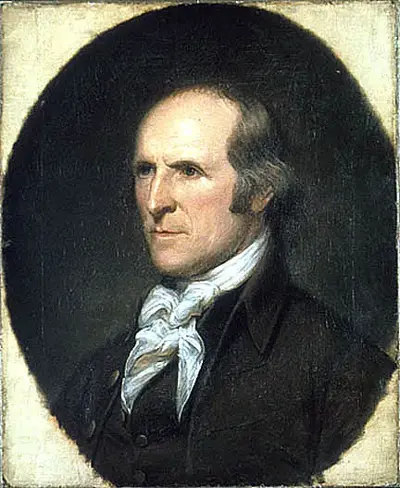
- Born: July 17, 1745
- Died: January 29, 1829
- Nationality:
- Profession:
Timothy Pickering was a politician from Massachusetts who served in a variety of roles, most notably as the third United States Secretary of State under Presidents George Washington and John Adams. He also represented Massachusetts in both houses of Congress as a member of the Federalist Party. In 1795, he was elected a member of the American Philosophical Society.
