Isaac Brock Quotes
It is far from my inclination to join in a war of extermination, but you must be aware that the numerous body of Indians who have attached themselves [to the English forces] will be beyond my control the moment the contest commences.
Hull surrendered a few days later.
Isaac Brock, 1769-1812, British General and Governor of Canada, Message demanding the surrender of the American General William Hull at Detroit, August 15, 1812
Sourced by: Eigen's Political and Historical Quotations


The same sentiment has been attributed to Aristotle.


At the time of this speech virtually the entire world believed that. However world attitude changed markedly after the administration of George W. Bush and the United States invasion of Afghanistan after September 11 and the Iraq War which was for regime change.


At the time the President denied that he had decided to invade Iraq. Skelton saw the “handwriting on the world.”


Ever since the end of WWII, no major war has been fought where there has been a classic victory where one nation is conquered by another and there is a surrender. Many of the wars have been fought against non-state actors or our war aim is a regime change or the establishment of a more friendly government. We have no desire to occupy the countries generally, and there is often no one “in charge” of the enemy who can even surrender. Bruce was referring to the Iraq War and the Afghanistan War. In each case, despite the lack of a surrender document, it can be said that America won both of these wars initially and then had great trouble with the occupation, the nation building, and keeping the peace. In Iraq and Afghanistan we suffered almost no casualties in the initial invasions. The occupation and “peace” is where we suffered almost all of our casualties.

Although Great Britain had abolished slavery, British economic interests during the Civil War suffered because of the northern blockade of the South. Much political opinion in England was hostile to the blockade policies of the Union. Bright, a great admirer and supporter of the United Sates and the Union cause was concerned that the United States might drift into War with Great Britain. His letter to Senator Sumner was written with the understanding that it would be in shared with President Lincoln, and it was actually read at a cabinet meeting.

In this case, he was referring to the situation with the Barbary Pirates who had an incredible extortion racket going in the Mediterranean. If nations would pay them an annual sum each year, they would not attack and seize merchant ships of that country and sell the ships and goods while holding the sailors for ransom. Jefferson favored and authorized war—a naval attack which for many reasons the European nations had not done (they just paid the tribute). Then a peace treaty was finally signed—the first American Treaty.


Some think that for Europe, Nuclear Weapons performed this function.

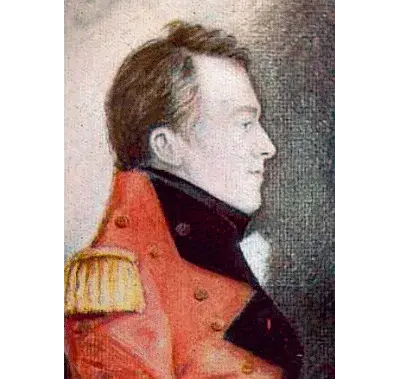
Major-General Sir Isaac Brock KB was a British Army officer and colonial administrator from Guernsey. Brock was assigned to Lower Canada in 1802. Despite facing desertions and near-mutinies, he commanded his regiment in Upper Canada (part of present-day Ontario) successfully for many years. He was promoted to major general, and became responsible for defending Upper Canada against the United States. While many in Canada and Britain believed war could be averted, Brock began to ready the army and militia for what was to come. When the War of 1812 broke out, the populace was prepared, and quick victories at Fort Mackinac and Detroit defeated American invasion efforts.
