Baldwin Spencer Quotes
Two hundred years ago, our precursors in Haiti struck a blow for freedom, which was heard around the world, and across centuries.
Spencer, Winston Baldwin. "Address to the United Nations General Assembly." 59th Session of the United Nations General Assembly, United Nations, 24 Sept. 2004.

Haitian Independence in 1804 was a momentous event for the free American Blacks. Johnson, a prominent Philadelphia musician and bandleader, played for Philadelphia Society. He was the first American Musician to play before integrated audiences as he was the first populizer of the American Pops Concert, and the first Black Musician to publish music in America. He also was the first American of any race whose band or ensemble was invited to Europe where he toured and played before Queen Victoria who presented him with a silver keyed bugle, the instrument he made famous.


St. Domingue was the name of Haiti which had had the only successful national slave revolt, but it was incredibly bloody with many casualties.


Marion was the initiator of Guerilla Warfare and he and his men traveled lightly spending much time in the South Carolina swamps. They had few supplies and when chased by the British could not stop to hunt. The British called him the “Swamp Fox”. The American colonists at this point still thought of the British as “their countrymen.”

Darwin was then a very young man, who had personal witnessed the slavery in South America and the Caribbean when he was on his famous expedition on HMS Beagle. See {630961} & {630962}. He was so disgusted with slavery that he hoped there would be armed slave revolutions and takeovers as had occurred in Haiti. Many of the English upper classes were radical when it came to slavery.


This was written more than a year before the American Revolution Battles began. It took time to ship the men and supplies to America and the British did not handle that task with much efficiency. See {636926} for another of the King’s statements.


Ironically, events later supported the truth of his statement. He was wrong about the parties however. It was the South who denied liberty to a very large part of their population, and it was the “unconquerable will” of the enslaved Negroes that eventually prevailed. It is hard for most of us in modern times to understand why Davis and other Southerners saw themselves as having freedom curtailed over an economic factor—chattel slavery—and not see that the institution of slavery was a total denial of freedom to a huge part of their population. See England’s Dr. Johnson XXXXX for a classic contemporary statement of this contradiction.
This quotation is historically important because Davis clearly states the reason for the rebellion of the South. The anti-slave states were growing at a greater rate than the slave states and despite the greater voting power that a southerner had (a result of the 3/5 count of slaves for census purposes, and the Senate), the handwriting was on the wall and the majority of the United States was against the vicious institution of slavery and would make it unprofitable, impossible and/or illegal in the coming years. Southern slavery advocates saw this as a “tyranny of the majority” and therefore took up arms. In the early 20th century, apologists for the Southern rebellion tried to promote the idea that there were reasons other than slavery, but this quotation and the resolutions of the states who withdrew from the Union make it clear that the right to maintain slavery was the only significant issue. In that sense it was a States’ Rights issue, but the South was opposed to States’ Rights when it came to States refusing to return fugitive slaves when Federal Law required such under the Dred Scott Supreme Court Decision.


Majority public opinion does not always prevail in a modern democracy as there are Constitutional limits on the prerogatives of the majority. Also leadership has played a strong role in America’s development where strong leaders have been able to do the right thing despite contrary public opinion.


She was one of the early abolitionists. Despite the Southern attempted repression of information of slave resistance, some of the facts emerged and were well known in the North. The South tried to suppress these incidents lest other slaves get ideas from it. Also the Southerners often maintained that Africa was so primitive and underdeveloped, that the slaves were better off in America; these actions of rebellion belied this notion.


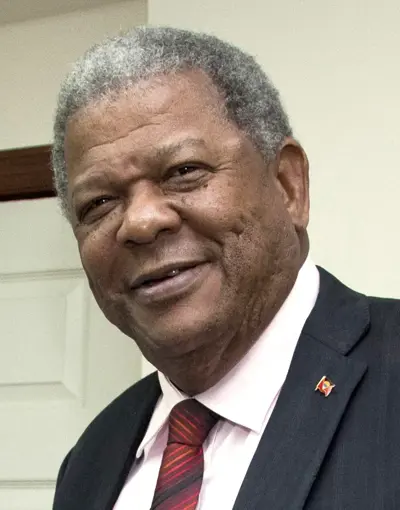
Winston Baldwin Spencer is an Antiguan politician who was the third Prime Minister of Antigua and Barbuda from 2004 to 2014.
