George Washington Quotes
To secure respect to a neutral flag requires a naval force organized and ready to vindicate it from insult or aggression.
Washington, George. "Eighth Annual Message to Congress, 7 December 1796." The Papers of George Washington, Presidential Series, vol. 21, University of Virginia Press, 2020, pp. 338-348.


The United States had no navy at that point.


This quotation illustrates some of the interesting attitudes of early Americans. First, note the backhanded slap at a standing army. The navy was much preferred by early Americans as history had demonstrated that most republics had been destroyed by their own armies taking over in some “emergency” of time of “crisis.” This also helps explain why the army and navy were different departments of government—a tradition that lasted until after WWII. The two departments had totally different purposes and objectives and presented different potential dangers to the nation.

He was referring to attacking the Barbary States. The Barbary Pirates had an incredible extortion racket going in the Mediterranean. If nations would pay them an annual sum each year, they would not attack and seize merchant ships of that country and sell the ships and goods while holding the sailors for ransom. See {640846}.


Political disputes over the degree of defense spending are classic in American political history. In the early 20th century, most conservatives were opposed to government spending for the military and the President had great difficulty getting the Conservative wing of his own party to support increased military appropriations. The remains of the great naval hero John Paul Jones had just been brought to the United States from France in which he had died. A large ceremony was held in Annapolis, Maryland and most of the conservatives who had opposed the military spending proposed by Roosevelt attended the ceremony to demonstrate their patriotism. TR shocked them by turning the solemn ceremony into a political embarrassment for them.


In 1878 there was tension between England and Russia. Some in England were militant advocates of war. This song was extremely popular among them. As a result, they became known as Jingoes or Jingoists. The song became popular in America at the approach of the Spanish-American War and jingoism became part of the American political vocabulary.

This verse is quoted in the Constitution of Iran (Article 151) in the section regarding it's military establishment.

This quotation illustrates several historical differences of the past with today. To be a world superpower, one had to have a dominant navy. Yet that navy was, in Churchill’s concept, a defensive system. It could protect the nation from invasion, and its merchant ships on the seas, but a navy provided no threat to invade towns and villages in Europe or elsewhere. Germany and France in contrast, with their large armies could invade other nations and menace Europe and Asia. It also illustrates why the navy and the army were considered completely separate departments of government in that they had different functions. The early American government had a Navy Department and Secretary but no Secretary of the Army or standing army.

The notion of America flexing its military muscles and intimidating other nations by sending a fleet of 16 battle ships around the world was not greeted enthusiastically by some. However in Japan, the reaction was totally positive. The Russo-Japanese War had been ended thanks to the mediation of Theodore Roosevelt (for which he was awarded the Nobel Peace Prize) and America was a model for much of Japan’s modernization. 25 years later the Japanese would view America as an interfering, intimidating bully, curtailing their national aspirations and rights.

Germany had world power aspirations before Adolf Hitler.

He didn’t succeed until Mahan wrote his marvelous treatise.
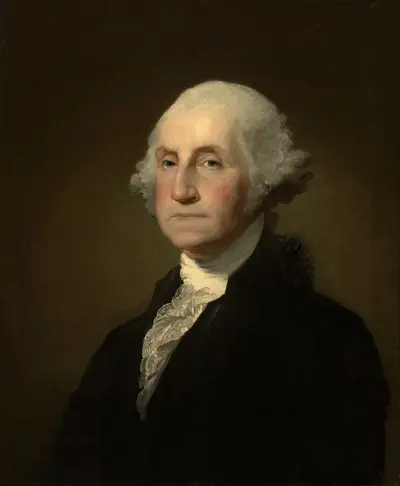
George Washington was the first President of the United States (1789-97), the Commander-in-Chief of the Continental Army during the American Revolutionary War, and one of the Founding Fathers of the United States. He presided over the convention that drafted the current United States Constitution and during his lifetime was called the "father of his country".
