George H. W. Bush Quotes
This government to government relationship is the result of sovereign and independent tribal governments being incorporated into the fabric of our Nation, of Indian tribes becoming what our courts have come to refer to as quasi-sovereign domestic dependent nations. Over the years the relationship has flourished, grown, and evolved into a vibrant partnership in which over 500 tribal governments stand shoulder to shoulder with the other governmental units that form our Republic.
Bush, George H. W. "Statement Reaffirming the Government-to-Government Relationship Between the Federal Government and Indian Tribal Governments." Public Papers of the Presidents of the United States: George Bush, 1991, Book I. US Government Printing Office, 1992, p. 662.


More and more whites had been encroaching on land of the Chickasaw Reservation which the United States was bound to protect. However, soldiers fighting whites was politically unpalatable and the Government came up with the idea of providing land West of the Mississippi as a new reservation in exchange for the existing reservation. The Indians expenses of moving would be paid and they would be given generous provisions in the new lands. The U. S. negotiators were surprised when the translator for the Chickasaw negotiators made this speech which was then reported to the President and Congress. Andrew Jackson was strongly in favor of Indian Removal and he had forced other tribes out of their lands. Eventually the Government upped the ante and agreed to pay the Chickasaw the large sum of $3 million to move and they Chickasaw realized that if they did not accept, they would be removed as other tribes had been, The promised payment was delayed over Congressional arguments over appropriations but eventually the Chickasaw were paid.


Most of the Colonies had laws against Indians possessing guns and any white seeing such was allowed to attack such Indians. Rhode Island had peaceful relations with the Indians and not only allowed Indians to carry firearms for hunting but hired them to do the hunting as they were better at it and did not value their time as highly as the whites. However, travelers coming from out of the colony would see an Indian with a gun, and shoot at him thereby killing or injuring friendly Indians and causing racial problems when there were few. The quotation also illustrates that there was little uniformity amongst the colonies as to how to deal with their various social and political problems.

The Cherokee's had fallen under the control of the Confederate military and Ross had urged Federal military protection for the tribe.

In the only presidential Special Message to Congress on the subject of Indians in American history:

Standing Bear and some other Indians left the Indian territory where the government had assigned their tribe and with an invitation went to live on another Indian reservation designated for another tribe. The Government sent the military police to take the Indians back to the Indian Territory. The Indians claimed that they had the right to live wherever they wanted and did not have to live in the place the government had assigned them. The Indians won and since then, Indians like all other Americans were free to go wherever in the country that they wanted so long s they were not trespassing or violating other laws.


This law allowed the President to forcibly move entire tribes from their native lands to sparsely settled land in the West. Oklahoma became knows as Indian Territory as so many Indians were relocated there. The act, and this clause in particular, gave the President the authority over all Indian tribes in the nation and established the difficult if not impossible relationship between the Indian nations and the Federal government. The act—the last sentence of the quote—also ratified all treaties with the Indians and pronounced them inviolate. That was not to be.

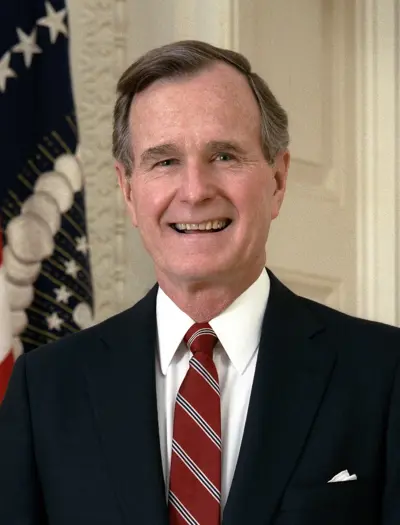
George Herbert Walker Bush was an American politician, diplomat and businessman who served as the 41st president of the United States from 1989 to 1993. A member of the Republican Party, Bush also served as the 43rd vice president from 1981 to 1989 under Ronald Reagan, in the U.S. House of Representatives, as U.S. Ambassador to the United Nations, and as Director of Central Intelligence.
