Elmer S. Dundy Quotes
In time of peace, no authority civil or military exists for transporting Indians from one section of the country to, another, without the consent of the Indians, nor to confine then to any particular reservation against their will; and where officers of the government attempt to do this and arrest and hold Indians who are at peace with the government for the purpose of removing teens to and confining them on a reservation in the Indian Territory they will be released on habeas corpus.
Standing Bear and some other Indians left the Indian territory where the government had assigned their tribe and with an invitation went to live on another Indian reservation designated for another tribe. The Government sent the military police to take the Indians back to the Indian Territory. The Indians claimed that they had the right to live wherever they wanted and did not have to live in the place the government had assigned them. The Indians won and since then, Indians like all other Americans were free to go wherever in the country that they wanted so long s they were not trespassing or violating other laws.
Elmer S. Dundy, 1830-1896, Federal Judge, United States, ex rel. Standing Bear, v. George Crook, a Brigadier-General of the Army of the United States
Sourced by: Eigen's Political and Historical Quotations

The Indians did not have the wheel when the whites came, but soon there were wagons, stage coaches and railroads.


In the only presidential Special Message to Congress on the subject of Indians in American history:


Standing Bear and some other Indians left the Indian territory where the government had assigned their tribe and with an invitation went to live on another Indian reservation designated for another tribe. The Government sent the military police to take the Indians back to the Indian Territory. The Indians claimed that they had the right to live wherever they wanted and did not have to live in the place the government had assigned them. The Indians won and since then, Indians like all other Americans were free to go wherever in the country that they wanted so long s they were not trespassing or violating other laws.

These elements later were used in the Civil Rights Act of 1866.


First Indian newspaper in the U.S.

This law allowed the President to forcibly move entire tribes from their native lands to sparsely settled land in the West. Oklahoma became knows as Indian Territory as so many Indians were relocated there. The act, and this clause in particular, gave the President the authority over all Indian tribes in the nation and established the difficult if not impossible relationship between the Indian nations and the Federal government. The act—the last sentence of the quote—also ratified all treaties with the Indians and pronounced them inviolate. That was not to be.

The treaty was signed by a number of people including the Navajo leaders but Sherman or his staff drafted most of it. Sherman also had the title then of Indian Peace Commissioner. This clause, together with Article V, {617991} guaranteed the territorial integrity to into the 21st century. The super majority requirement was key, preventing what happened to many other Indian land holdings which were sold off by individuals or so called chief’s who were not really representing the majority of the tribe.
Jackson’s policies regarding Indians set back all the work of the earlier Presidents and created facts on the ground and attitudes that vex us to this day. In this occasion he said very forthrightly that it was his intention to deny Indians title to ANY land in the then United States. His idea was to send all the Indians to the Oklahoma Indian Territory and establish reservations for them there. Of course, as the Western states joined the Union, the Whites wanted those Indian Lands as well. See {643150} for other Jackson views on Indian policy.


The intentions of the Founding Fathers towards the Indians was decent, respectful, and well intentioned. However, there was not enough of a system of enforcement or the will to enforce when the greed of the average whites grew too great. Many settlers saw these vast lands and could not see any harm in using a few acres for their farm. And if there had been only a few, there would have been little trouble. However, the settlers kept coming and coming and soon the Indians began to push back. In a sense, it was a class problem. The members of the Continental Congress who wrote the Northwest Ordinance were educated, affluent men who had plenty of land. Most of the men who contested for the Indian lands had little land or were newly affluent and saw few limits to America.

Jackson ignored the decision of the Supreme Court and forced at bayonet point the Indians in the South East to leave their land and relocate to Oklahoma in what has been known as “the trail of tears”.


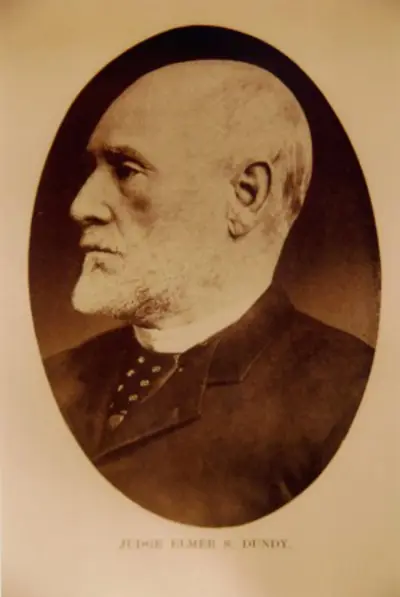
Elmer Scipio Dundy was a United States District Judge of the United States District Court for the District of Nebraska. He was the namesake of Dundy County, Nebraska.
