Robert M. T. Hunter Quotes
There is not a respectable system of civilization known to history whose foundations were not laid in the institution of domestic slavery.
Robert M. T. Hunter, 1809-1887, U. S. Senator (Whig, VA), Quoted in James M. McPherson, Battle Cry of Freedom
Sourced by: Eigen's Political and Historical Quotations


As a result of the programs and philosophy he expounded, Leontiev joyously predicted:


Brown was then a member of the state legislature representing Providence. He was also himself a ship owner in the slave trade and he was the brother of the leading Rhode Island abolitionist, Moses Brown. See {585793}. John Brown became the first American, prosecuted in federal court for illegal slave trading –-- a prosecution brought, in part, by his own brother, Moses. He was acquitted.


Indian and Black slaves were outlawed very early in Connecticut, not on moral grounds of concern for the Indians and Blacks, but because of the negative effects on the white poor. Why would anyone pay the poor any more than the amortization costs of a slave? Therefore there was no way a poor white could make a living wage if slavery were to coexist.

Many historians of higher education to not agree with Wilder’s overall generality. However, it was certainly the case that slavery was a major factor in generating the funds for some early universities in the North, but others were “hotbeds” of abolition from their very inception.


No sooner had Georgia Banned slavery, then some of the large planters petitioned the trustees for a reversal of the ban on the grounds that South Carolina, their neighboring colony allowed planters to use slaves and this put the Georgia planters at a major competitive disadvantage. Oglethorpe won the battle but later lost the war as the ban was overturned and Georgia became one of the worst slave states. What is interesting about this quotation is that in addition to his pragmatic reasons for banning slavery, he was morally offended but the notion and method of chattel slavery and the slave trade. See Quotes 643524 and 643525.

A few years later he had a clearer idea of what was to be done. However, the additional factor of the Civil War played a big part in driving his Emancipation Proclamation. See {609360}


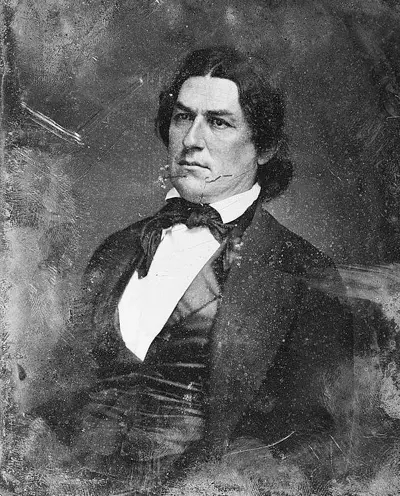
Robert Mercer Taliaferro Hunter was a Virginia lawyer, politician and plantation owner. He was a U.S. Representative (1837–1843, 1845–1847), Speaker of the House (1839–1841), and U.S. Senator (1847–1861). During the American Civil War, Hunter became the Confederate States Secretary of State (1861–1862) and then a Confederate Senator (1862–1865) and critic of President Jefferson Davis. After the war, Hunter failed to win re-election to the U.S. Senate, but did serve as the Treasurer of Virginia (1874–1880) before retiring to his farm. After fellow Democrat Grover Cleveland was elected President of the United States in 1884, Hunter became the customs collector for the port of Tappahannock until his death.
