William H. Seward Quotes
To reduce this claim of slavery to an absurdity, it is only necessary to add that there are only two states in which slaves are a majority, and not one in which the slaveholders are not a very disproportionate minority.
Seward, William H. The Works of William H. Seward. Edited by George E. Baker, vol. 1, Redfield, 1853, p. 67.


As a result of the programs and philosophy he expounded, Leontiev joyously predicted:

Toward the end of the 19th century Cambodia became a protectorate of France. One of the first things that the French did was abolish slavery. There was a general rebellion as few in Khmer society wanted change of any kind.

To justify slaveholding in one’s own mind, religion, culture, values, concepts of write & wrong all have to be twisted and when a substantial group of people do that for a number of decades, the do not form a different race but they certainly do become a different cultural subgroup. The hypocrisy of slavery and a free society is the ultimate twist of logic. Also, many modern psychologists have analyzed the extremely cruel and inhuman tortures and punishment that slave owners meted out and observed as strongly suggested abnormally sadistic perversions present in so many.

No sooner had Georgia Banned slavery, then some of the large planters petitioned the trustees for a reversal of the ban on the grounds that South Carolina, their neighboring colony allowed planters to use slaves and this put the Georgia planters at a major competitive disadvantage. Oglethorpe won the battle but later lost the war as the ban was overturned and Georgia became one of the worst slave states. What is interesting about this quotation is that in addition to his pragmatic reasons for banning slavery, he was morally offended but the notion and method of chattel slavery and the slave trade. See Quotes 643524 and 643525.

Contrast this view with that of Union General Ulysses S. Grant.


A few years later he had a clearer idea of what was to be done. However, the additional factor of the Civil War played a big part in driving his Emancipation Proclamation. See {609360}


The President often referred to this statement as an example of his wife’s acumen. She had been born to a Southern plantation and inherited the land and the slaves. Her view, and his, were typical of the Southern point of view in early America.
Many historians of higher education to not agree with Wilder’s overall generality. However, it was certainly the case that slavery was a major factor in generating the funds for some early universities in the North, but others were “hotbeds” of abolition from their very inception.


The “slaves” were American merchant sailors whose ships had been taken by the Barbary Pirates of Algiers who the Dey controlled. He was actually negotiating and trying to get a high price with this statement. The graphic shows a Barbary pirate ship chasing a merchant galley.
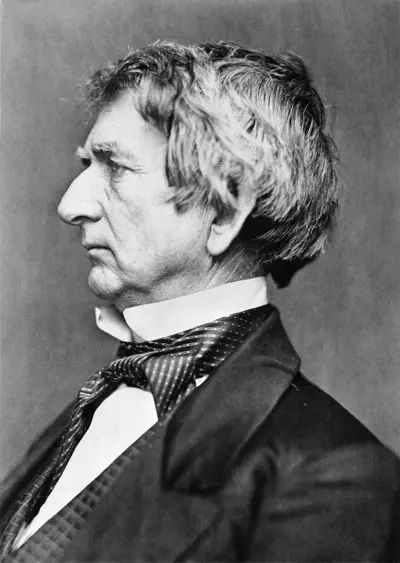
William Henry Seward was United States Secretary of State from 1861 to 1869, and earlier served as governor of New York and as a United States Senator. A determined opponent of the spread of slavery in the years leading up to the American Civil War, he was a prominent figure in the Republican Party in its formative years, and was praised for his work on behalf of the Union as Secretary of State during the Civil War.
