James Edward Oglethorpe Quotes
Georgia would become an oppressive regime, promoting the misery of thousands in Africa by permitting a free people to be sold into perpetual Slavery.
No sooner had Georgia Banned slavery, then some of the large planters petitioned the trustees for a reversal of the ban on the grounds that South Carolina, their neighboring colony allowed planters to use slaves and this put the Georgia planters at a major competitive disadvantage. Oglethorpe won the battle but later lost the war as the ban was overturned and Georgia became one of the worst slave states. What is interesting about this quotation is that in addition to his pragmatic reasons for banning slavery, he was morally offended but the notion and method of chattel slavery and the slave trade. See Quotes 643524 and 643525.
James Edward Oglethorpe Letter to the Trustees of the Georgia Colony 1739
Sourced by: Eigen's Political and Historical Quotations

Georgia was originally founded by Oglethorpe as a type of utopian middle class colony. Slavery was banned in no other American Colony. However, the pressure from some rich planters was intense and the ban was overturned in 1749 due to the pressure of George Whitfield and others. Slaves numbered 18,000 by the American Revolution. Georgia became one of the worst of the slave states, adn was one of the leading Confederate states urging Rebellion and Secession to protect the institution of slavery.

See the Vermont Constitution for another variant of how slavery was abolished: {616994}


Nott, a Southerner who owned slaves, was not only an apologist for slavery as this quotation illustrates, but also wrote on his theories of race. Nott was one of the writers about race that Darwin singled out as being completely wrong in 1871: The Descent of Man.

The general issued a military order emancipating slaves in Florida, Georgia and South Carolina. President Abraham Lincoln rescinded the order feeling it was too premature and it would cause the slave states that stayed in the Union--Delaware, Maryland, and Kentucky--to go over to the Confederates.


America’s first political economist. By his analysis the percentage of death of slaves in the British West Indies was far greater than that of American slavery. By the time England emancipated its slaves there were far fewer than there should have been unless they had been killed off at a very high rate—usually worked to death, poorly fed, unsanitary and unsafe conditions, and little or no medical care.

He was also himself a ship owner in the slave trade and he was the brother of the leading Rhode Island abolitionist, Moses Brown. See {585793}. Brown became the first American, prosecuted in federal court for illegal slave trading –-- a prosecution brought, in part, by his own brother. He was, however, acquitted.

There was little thought of emancipating slaves or their value to the South by the senior officers of the Union Army at the beginning of the war. The Secretary of War changed that. See {629183}for a typical Union General’s view at the beginning of the war.


A few years later he had a clearer idea of what was to be done. However, the additional factor of the Civil War played a big part in driving his Emancipation Proclamation. See {609360}

This quotation illustrates the strong abolitionist tendency in the Ohio Territory. Under this clause, escaped slaves from Southern states would not be returned by the state authorities. Even more insulting to the slave enthusiasts of the South, if a Southerner brought any slaves into Ohio with them as was common for Southerners traveling with their personal slaves or horse team drivers, those slaves would be free. An interesting aspect of this clause of the Ohio Constitution was that the beginning was, word for word, copied from the Northwest Ordinance of 1787. See {618100}.
Brown was the richest man in Rhode Island and made much of his money in the slave trade. This quotation shows that slavery was not completely a North verses South split. Northerners like Brown for whose family Brown University was named, was as virulent supporter of slavery as the most ardent Southerner.


Generally, Jefferson was not in favor of whipping slaves, but this quotation shows that he essentially accepted the basic principles of Southern Slavery—including the one that says if the person does not want to work for you, you may whip, beat, or torture him or her to produce “reasonable work.” This acceptance of slavery and profiting from it, is the terrible blot on the record of the man who otherwise was among the few greatest of Americans.


This was part of his presentation to Northern influential business men showing them what he claimed was the New South. He was particularly complimentary about the negro Christian viewpoint that inhibited revenge or retaliation for their terrible treatment. The favorable lines about Negroes were well received by Northerners. However, they were mostly unaware of his racist views he expressed when in the South. See Quotation 643649.


Pernambuco is a state of Brazil. His voyage took him to several slave countries.

This law required the treatment of Blacks as whites were then treated with respect to indentured servitude—a limit of 10 years after which the person would be free. However, this law was poorly enforced. The “General Court” was the name for the legislature of the Rhode Island colony.

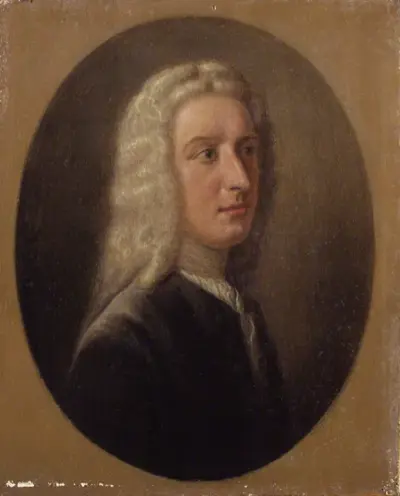
- Born: December 22, 1696
- Died: June 30, 1785
- Nationality: British
- Profession: Politician
James Edward Oglethorpe was a British soldier, Member of Parliament, and philanthropist, as well as the founder of the colony of Georgia in what was then British America. As a social reformer, he hoped to resettle Britain's worthy poor in the New World, initially focusing on those in debtors' prisons.
