Daniel Dulany Quotes
A slave has never maintained an action against the violator of his bed. A slave is not admonished for incontinence, or punished for fornication or adultery; never prosecuted for bigamy …
Daniel Dulany, 1687-1753, Attorney General, Colony of Maryland, 1 Maryland Reports, pp. 561, 563
Sourced by: Eigen's Political and Historical Quotations

Sexual abuse of female slaves was very common in the American South. See {642027} and {642028}. In the 1930s over 2,300 formerly enslaved African Americans were interviewed by members of the Federal Writers' Project, a New Deal agency in the Works Progress Administration (WPA) during the Great Depression. This particular abuse was one of the most common reported. Ironically, the Southern justification for segregation and prohibition of inter-marriage even through the 1950s, was to prevent the great “crime” of miscegenation which white slave owners and their male friends committed by raping and sexually exploiting the female slaves. Today, as DNA analysis shows, most traditional Southern “white” families have recent Negroes in their ancestry.

Parker and other escaped slaves in Christiana fought off slave catchers and killed the slave owner leading them. Charged with treason, he escaped to Canada with his family and lived there the rest of his life. While not a polished writer, after he himself had escaped and went to Christiana and leaned to read and write. He wrote this narrative of his life as a slave—one of the few written works we have from slaves.

The general issued a military order emancipating slaves in Florida, Georgia and South Carolina. President Abraham Lincoln rescinded the order feeling it was too premature and it would cause the slave states that stayed in the Union--Delaware, Maryland, and Kentucky--to go over to the Confederates.

Miller was the first Black American admitted to a Graduate Program—Johns Hopkins—in Mathematics


This statement was made long after slavery had been abolished and Jim Crow was on the rise in the South.

Brown was the richest man in Rhode Island and made much of his money in the slave trade. This quotation shows that slavery was not completely a North verses South split. Northerners like Brown for whose family Brown University was named, was as virulent supporter of slavery as the most ardent Southerner.
Parker and other escaped slaves in Christiana fought off slave catchers and killed the slave owner leading them. Charged with treason, he escaped to Canada with his family and lived there the rest of his life. While not a polished writer, after he himself had escaped and went to Christiana and leaned to read and write. He wrote this narrative of his life as a slave—one of the few written works we have from slaves.

The President often referred to this statement as an example of his wife’s acumen. She had been born to a Southern plantation and inherited the land and the slaves. Her view, and his, were typical of the Southern point of view in early America.


As a British Loyalist officer, he and his men were dispatched to Savannah, Georgia. There he saw the Southern version of slavery for the first time and was shocked at the cruelty. At the end of the Revolutionary war, he and many other loyalists fled to Canada and began his political career, then representing Britain in the Caribbean. See also {591379}.


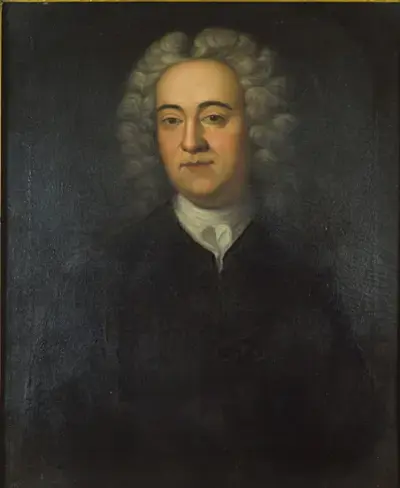
Daniel Dulany the Elder (1685–1753) was a prominent lawyer and land-developer in colonial Maryland, who held a number of colonial offices. In 1722 Dulany wrote a pamphlet entitled The Right of the Inhabitants of Maryland, to the Benefit of the English Laws, asserting the rights of Marylanders over the Proprietary Government.
