Thomas Ruffin Quotes
The end of slavery is the profit of the master …. The slave is doomed to toil, that others may reap the fruits.
Thomas Ruffin, 1787-1870, Chief Justice of the North Carolina Supreme Court, The State v. John Mann, 1829
Sourced by: Eigen's Political and Historical Quotations


Ruffin is more widely known as the man who fired the first shot of the Civil War.


The “lords of the lash” were the Southern slave owners. The “lords of the loom” were the Northern mill owners. The Southern cotton, grown by cheap slave labor was sold to the Northern mill owners at very low prices. They in turn wove the cotton into cloth and sold it throughout the nation and to foreign countries. So, although there was strong Northern anti-slavery sentiment, the wealthy and politically powerful mill owners had a vested interest in maintaining slavery in the South.


Pernambuco is a state of Brazil. His voyage took him to several slave countries.


Brown was the richest man in Rhode Island and made much of his money in the slave trade. This quotation shows that slavery was not completely a North verses South split. Northerners like Brown for whose family Brown University was named, was as virulent supporter of slavery as the most ardent Southerner.


There was little thought of emancipating slaves or their value to the South by the senior officers of the Union Army at the beginning of the war. The Secretary of War changed that. See {629183}for a typical Union General’s view at the beginning of the war.


This is one of the major reasons that Slavery was so hard to end in the South. At the time, the dollar value of the Southern slaves was greater than the value of all the land, factories, inventory, and capital equipment of the South. Slaves were not only capital, they were the largest component of Southern capital and Southern wealth. There were numerous ideas of paying slave owners for the freedom of their slaves, and if this was done, it would have been far less expensive in money alone than the Civil War cost. However, the Southern leadership, like Fitzhugh, were totally intransient with culture and customs—indeed the Southern concept of manhood—was dependent in Slavery. The result was that no compensation was paid to slave owners and the South was impoverished as a result of its capital loss and it would not recover for 150 years.

This was written under the name of Ragnar Redbeard. There are a few scholars who believe that it was written by Jack London, but most credit Desmond.

A few years later he had a clearer idea of what was to be done. However, the additional factor of the Civil War played a big part in driving his Emancipation Proclamation. See {609360}


Jefferson was then the United States Minister to France. While in Paris he was offered membership by M. de Warville in the Society for the Abolition of the Slave-Trade. Jefferson felt that he had to decline because his joining would have been seen as a politically polarizing act, inappropriate for an Ambassador of the American government which was divided on the issue of slavery. Some criticize the refusal and argue that this would have been the perfect act to push the abolition perspective, and question Jefferson’s sincerity about slavery as he not only refused to join the society, but never freed his own slaves though it is argued that he never made enough money to afford to emancipate them.
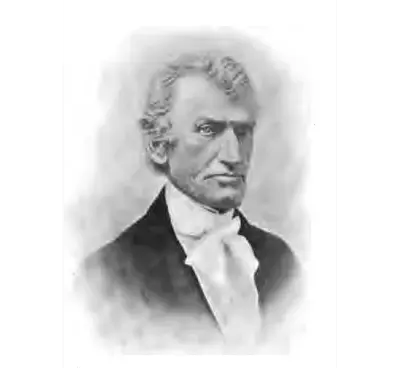
Thomas Ruffin (1787–1870) was an American jurist and Justice of the North Carolina Supreme Court from 1829 to 1852 and again from 1858 to 1859. He was Chief Justice of that Court from 1833 to 1852.
