Thomas Wentworth Higginson Quotes
The biographies of slaves can hardly be individualized; they belong to the class. We know bare facts; it is only the general experience of human beings in like condition which can clothe them with life. The outlines are certain, the details are inferential.
Thomas Wentworth Higginson, 1823–1911, Unitarian Minister, Author, Abolitionist, Feminist, Reformer & Soldier, Observation of Black Soldiers in the Civil War, “Nat Turner’s Insurrection”, The Atlantic Monthly, August 1861
Sourced by: Eigen's Political and Historical Quotations


In early New England the General Court served as both a legislature and a judiciary before separation of powers was introduced. 5 years later the Court banned importing African slaves at all. While slavery was not common in Rhode Island, the laws was not seriously enforced on those who would defy them. It does represent a public anti-slavery sentiment that existed in Early America. It would take 200 years for Rhode Island to finally eliminate all forms of slavery.


Miller was the first Black American admitted to a Graduate Program—Johns Hopkins—in Mathematics

This law required the treatment of Blacks as whites were then treated with respect to indentured servitude—a limit of 10 years after which the person would be free. However, this law was poorly enforced. The “General Court” was the name for the legislature of the Rhode Island colony.


The general issued a military order emancipating slaves in Florida, Georgia and South Carolina. President Abraham Lincoln rescinded the order feeling it was too premature and it would cause the slave states that stayed in the Union--Delaware, Maryland, and Kentucky--to go over to the Confederates.

This quotation illustrates the strong abolitionist tendency in the Ohio Territory. Under this clause, escaped slaves from Southern states would not be returned by the state authorities. Even more insulting to the slave enthusiasts of the South, if a Southerner brought any slaves into Ohio with them as was common for Southerners traveling with their personal slaves or horse team drivers, those slaves would be free. An interesting aspect of this clause of the Ohio Constitution was that the beginning was, word for word, copied from the Northwest Ordinance of 1787. See {618100}.
The white skilled laborers of the North were not the only ones who found slavery deleterious to their economic well being. The complaints to the Carolina legislature produced a finding as early as 1744 that whites were adversely affected.


Negotiations regarding the exchange of prisoners and property. This was his view of his supposed obligation to return Negro slaves who had escaped and gone to the British during the war. The treaty of peace specified that all “property” including slaves, taken by, the British be returned to the Americans. But he and other officers did not always do so as they thought they had higher moral obligations. See {621936} for example.

Many historians point to this quotation as demonstrating Jefferson’s antipathy to slavery. However, others, more cynical, observe that by curtailing the ability to bring new slaves into Virginia, the economic value of the slaves who already existed increased markedly, First because there was a limited supply and a growing economy, but more important because the slave owner could breed and sell slaves from the existing stock he had. Jefferson was very aware of this economic fact, had worked out the mathematics and economics, and even advised friends to take advantage of it. See {629765}. Jefferson’s view of slavery was very complex and ambivalent.
This fear was great among many who were abolitionists as potentially there might be mass slaughter of all Southern whites.

This is a memorable historical quotations because it shows the extreme level of hypocrisy and lack of logic of which man is capable of when his way of life and world view is threatened. In this case Gordon sees the right to own slaves as a basic civil right. He does not see that the right of possessing slaves totally denies virtually all civil rights to the slave. In his and other Southern views, to assure a man’s liberty he had to have the right and freedom to deny freedom to others, torture others at will, destroy families and remove all hope and aspiration of some people.

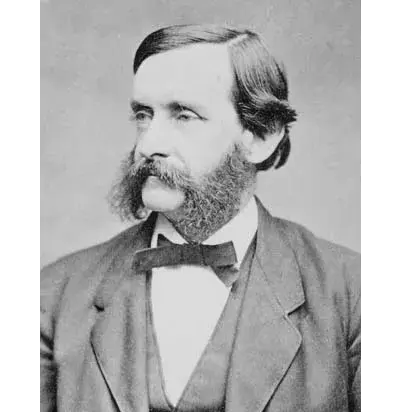
Thomas Wentworth Higginson was an American Unitarian minister, author, abolitionist, and soldier. He was active in the American Abolitionism movement during the 1840s and 1850s, identifying himself with disunion and militant abolitionism. He was a member of the Secret Six who supported John Brown. During the Civil War, he served as colonel of the 1st South Carolina Volunteers, the first federally authorized black regiment, from 1862–1864. Following the war, Higginson devoted much of the rest of his life to fighting for the rights of freed people, women and other disfranchised peoples.
