Lyndon B. Johnson Quotes
There is no American right to loot stores, or to burn buildings, or to fire rifles from the rooftops. That is crime—and crime must be dealt with forcefully and swiftly, and certainly—under law.
Lyndon Baines Johnson, 1908-1973, 36th President of the United States (Democrat, TX), Television address to the nation on rioting in New York City, July 27, 1967
Sourced by: Eigen's Political and Historical Quotations


Defending his administration and the Chicago police against the charge that they used excessive force and caused a police riot during the Democratic National Convention of 1968:


This proclamation was obviously unconstitutional, but at the time no one challenged it in the courts. It is yet another example, where in an emergency, executive officers of government tend to over-reach and expand their power and authority using the necessity of the emergency as the justification. This case was particularly ironic in that the mayor, so concerned with law and order that he would summarily kill people suspected of looting, was indicted and convicted for corruption the following year. His jail time was limited by a successful court appeal, and he then lost as a mayoralty candidate, but did finally get elected to the San Francisco City Council. Of course, had he been shot when first suspected of his crime—as he proscribed for others--he would never have had the opportunity to appeal and be acquitted.


Indonesian Terrorist Vigilante Group. The organization is actively supported by many of the leading Muslim Indonesian Generals.

It is a common misconception that anarchists would not have any societal mechanism for preventing and combatting crime. Anarchists believe in the long run that with anarchism the reasons and motivations for crime will disappear, but until then they generally have been willing to use force to protect against force being used against the citizens. To critics, this seems to be government, and a government which uses force. Anarchists have never well detailed how they would manage such a seemingly conflicting situation.


He had no authority to do this. He just took it upon himself. This was one of the incidents which caused later Congresses to pass very strict laws limiting the authority of all Federal Military and other intelligence and police forces so that they have little or no authority within the United States. President Lincoln did not allow the order to stand, although he repudiated it very delicately and as privately as possible. Many in his own party strongly favored this proclamation as it cracked down on the Southern Rebels and emancipated slaves—both objectives of many Republicans. In addition, Fremont was very popular with the people and had strong political connections. (He would later run for President.) See {635739}.


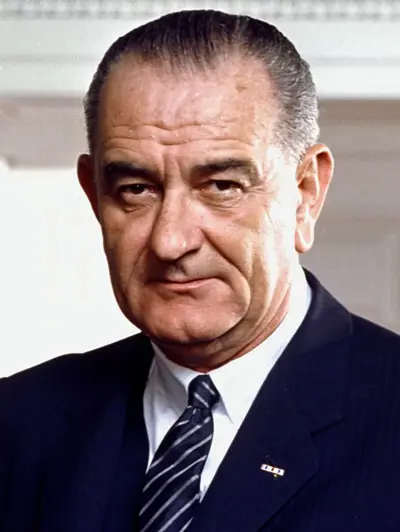
Lyndon Baines Johnson, often referred to by his initials LBJ, was the 36th president of the United States, in office from 1963 to 1969. He served as the 37th vice president from 1961 to 1963 and assumed the presidency following the assassination of President John F. Kennedy. A Democrat from Texas, Johnson was also a United States representative and later majority leader in the United States Senate. Johnson is one of only four people to have served, at various times, in all four federal elected positions.
