William Henry Harrison Quotes
The times are such as ... to make it the duty of every friend of the country to keep a true lookout and if possible, discover and expose to the detestation of the world those traitors, who acting under foreign influences are plotting schemes destructive to the interests of their country.
Harrison, then a young Captain, was concerned about the French, British and Spanish agents "plotting" in the United States:
William Henry Harrison, 1773-1841, 9th President of the United States (Whig, OH), Letter to the War Department, 1841
Sourced by: Eigen's Political and Historical Quotations


Commenting on a former CIA agent's defection to Russia:

In 1937 four nationalist army columns were converging on Madrid in the Spanish Civil War. General Mola was asked which column would take Madrid. His reference to the sympathizers inside the city became a universal term for traitors.

Before the 1968 election, President Johnson, and gotten the North Vietnam Communists to agree to Peace Talks with the U. S. and South Vietnam. Then Candidate Nixon thought that if the peace talks were ongoing and making progress, there would be more support for the Democrats and Nixon's opponent Hubert Humphrey. So Nixon secretly send a secret emissary to South Vietnamese President Nguyen Van Thieu telling him that he would not get a very good deal because President Nixon claimed that President Johnson was too eager to end the Vietnam war. He suggested that if Thieu boycotted the peace talks, then when Nixon was elected, he would guarantee a much better deal for South Vietnam and Thieu personally. President Thieu boycotted the peace talks and there could be no progress. However there is a Federal Law, the Logan Act, that makes it a felony for a private American citizen to conduct or interfere with foreign policy or negotiations with a foreign government. President Johnson found out about Nixon—s sabotage of the Peace Talks, called Nixon and threatened him with prosecution if he interfered further. LBJ had decided that with the left wing at odds with the U. S. Government over the Vietnam War, a prosecution of Nixon would cause the Right Wing to challenge the government also and the country didn—t need further polarization. He would do that only if Nixon did not heed the President—s warning. But when Nixon won the election and became President, he was terribly anxious that his pre-election crimes would be made public, and spent much of his time and staff effort trying to find out who knew about his politically self-serving felony and who might make his crime public. See {583264}.

He was shot in 1944 for his involvement in an attempt to kill Hitler


Power to legislate had just been given to Hitler and his cabinet.


The names cited were the British police and military forces. Fraternization was considered spying and brought death. That year the IRA executed over 100 of their fellow Irishmen, with no trial or chance to defend themselves. Some were scores and personal grudges being settled and others mistakes.


Ironically, until after the assassination of JFK, the United States did not have a specific crime against killing the President.

Although it seems incredible to us today, thousands of people were arrested and prosecuted under the Espionage Act. The government particularly targeted leftists such as Eugene V. Debs, Bill Haywood, J. Philip Randolph, Victor Berger, John Reed, Max Eastman, and Emma Goldman. Debs was sentenced to 20 years in prison for criticizing the Act itself.


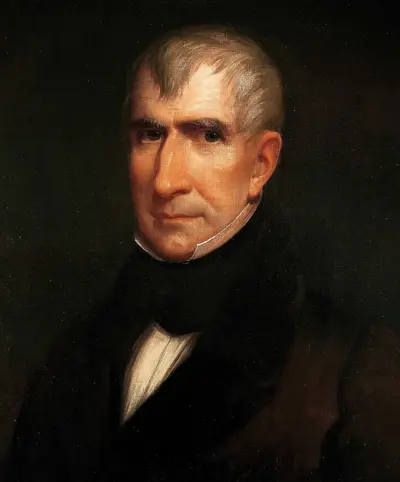
William Henry Harrison was an American military officer and politician who served as the ninth president of the United States for 31 days in 1841, becoming the first president to die in office and the shortest-serving U.S. president in history. His death sparked a brief constitutional crisis regarding succession to the presidency.
