James Monroe Quotes
The Sovereign: The People
James Monroe, 1758-1831, 5th President of the United States (Democratic Republican, VA), Title of the book he was writing at his death in 1831
Sourced by: Eigen's Political and Historical Quotations

The view was considered so radical at the time that Fox's name was erased from the Privy Council.


He changed his views a great deal since this time when he was only 28 years old and the IRA Chief.


_0_thumbnail_47x47.jpg "Statue of Robert Hall in Leicester.")
For many people the implication of this quotation is that there should be no government secrets withheld from the citizens who have the right to examine. Others argue that government may have temporary secrets to protect against foreign enemies for example, but that these must be declassified very promptly so that the citizens can examine the actions of their government in time to replace the government if they are not satisfied. Almost all government officials tend to reject the first implication out of hand, and grudgingly accept the second with their discretion controlling when declassification should take place. The problem of America is twofold. There is much over-classification (material kept secret that should not be at all), and the time till declassification is long in general and truly absurd in many cases. For example, there are documents from WWII that by 2013 had still not been declassified. See {591444}, {641317}, and {589105} for exemplar views. William Jennings Bryan introduced this principle into the American political dialogue. See {641027}.


See Franklin Delano Roosevelt and Grover Cleveland for a similar view.

See Edmund Burke and Franklin Delano Roosevelt for a similar view.

At the time Democracy as a form of government meant citizens voting for their own laws—not their representatives. Today we call that “Direct Democracy” as in a New England Town Meeting.

Samuel Langhorne Clemens, 1835-1910. Even in a democracy, governments often enact laws that the public disapproves of and fails to enact others that the public wants. Most taxes are examples of the former; gun control legislation, of the latter.

Note the similarity to Lincoln who Ataturk very much admired.
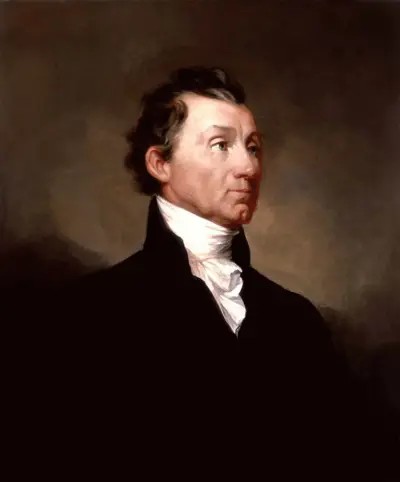
James Monroe was an American statesman, lawyer, diplomat and Founding Father who served as the fifth president of the United States from 1817 to 1825. A member of the Democratic-Republican Party, Monroe was the last president of the Virginia dynasty; his presidency coincided with the Era of Good Feelings. He is perhaps best known for issuing the Monroe Doctrine, a policy of opposing European colonialism in the Americas. He also served as the governor of Virginia, a member of the United States Senate, the U.S. ambassador to France and Britain, the seventh Secretary of State, and the eighth Secretary of War.
