Edmund Burke Quotes
If any ask me what a free government is, I answer, that for any practical purpose, it is what the people think so, and that they, and not I, are the natural, lawful, and competent judges of the matter.
Edmund Burke, 1729-1797, Irish Orator & Member of the British Parliament, Letter to the Sheriffs of Bristol, April 3, 1777
Sourced by: Eigen's Political and Historical Quotations


Garfield reminded Americans of how radical and unusual the concept of democracy had been at the time of the adoption of The Constitution, and that the American Revolution was one of ideas as well as armies.
_0_thumbnail_47x47.jpg "Statue of Robert Hall in Leicester.")
For many people the implication of this quotation is that there should be no government secrets withheld from the citizens who have the right to examine. Others argue that government may have temporary secrets to protect against foreign enemies for example, but that these must be declassified very promptly so that the citizens can examine the actions of their government in time to replace the government if they are not satisfied. Almost all government officials tend to reject the first implication out of hand, and grudgingly accept the second with their discretion controlling when declassification should take place. The problem of America is twofold. There is much over-classification (material kept secret that should not be at all), and the time till declassification is long in general and truly absurd in many cases. For example, there are documents from WWII that by 2013 had still not been declassified. See {591444}, {641317}, and {589105} for exemplar views. William Jennings Bryan introduced this principle into the American political dialogue. See {641027}.


See Franklin Delano Roosevelt and Grover Cleveland for a similar view.


During the early days of the American independence movement, many were preoccupied with the philosophical and theological issues of whether the Almighty approved of monarchy or not. Parker urged concentration on assuring independence first.
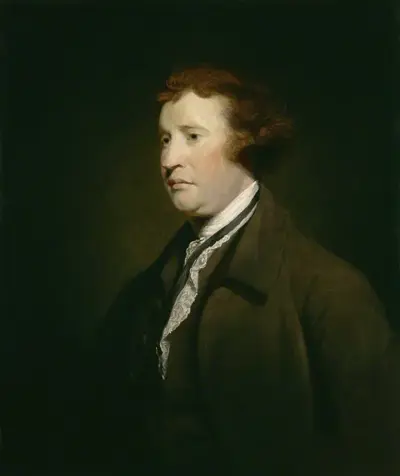
Edmund Burke was an Irish statesman, economist, and philosopher. Born in Dublin, Burke served as a member of parliament (MP) between 1766 and 1794 in the House of Commons of Great Britain with the Whig Party after moving to London in 1750.
