Greg Grandin Quotes
The removal of the British after the American Revolution opened the floodgates of paramilitary ranger power. For instance, in 1786, ranger units, including one that included Daniel Boone, attacked a number of friendly Shawnee towns along the Mad River.
Grandin, Greg. The End of the Myth: From the Frontier to the Border Wall in the Mind of America. Metropolitan Books, 2019.


In March of 1814 Jackson led a force to track down the Red Sticks. When they did so at Horseshoe Bend. Jackson made a frontal assault on the Red Stick Breastworks which might have gone badly had not a cotangent of Cherokee Indians—also concerned about the Red Sticks attack on their settlements, assaulted the Red Sticks from the rear. The Red Sticks, caught between the two uncoordinated attackers, lost over 900 men and the battle which then decided the war. In this Battle, Junaluska, a Cherokee, saved Jackson’s life. Years later he would not differentiate between the different Indian peoples and contrary to a Supreme Court order, forced the Cherokee from their settled farms and ranches and moved them to the Oklahoma Territory.

The months later, Colorado “volunteers” attacked a Cheyenne village flying and American and White flag, killing the women and children at what would come to be known as the Sand Creek Massacre.


Wayne played so many parts depicting whites in the process of expanding Westward that many people saw him as an expert on the history of the Westward Expansion. He did not comment on the whites who then kept huge ranches “selfishly” for themselves or those who selfishly would not share the mineral rich land that they had taken with anyone including the original Indian owners. So in this view, the Indians should have not been capitalists but they should have been socialists and shared their resources.

Sheridan was essentially right. With the Bison no longer available for hunting, the plains Indians had to depend on agriculture and settle on reservations or assimilate and integrate into white society. There was no specific policy to destroy the great buffalo herds, but the railroads allowed meat and the hides to be shipped East and sold for large profits for the companies who organized hunters and paid well for the buffalo. The overhunting and lack of any conservation principles soon led to the disappearance of the herds and almost made the Bison extinct. Today, we have built up some herds and they are being raised like cattle again providing meat and hides for man’s use. It is too bad that these techniques were not known then, as that could have been a terrific industry for the Indians although ranching was contrary to their then existing culture.

This quotation illustrates the racist view of Native Americans that prevailed at the time. The Mexican government invited settlers and would give then the Indian lands. In addition to Mexicans who came to Texas, many Americans also went to Texas, changing their citizenship to Mexico. Later, they banded together and broke from Mexico and Joined the United States. The Indians lost most of their lands.


Most of the Iroquois, under the influence of Joseph Bryant, thought that the English would be the winner in the American Revolution. With the exception of the Huron Tribe, the Iroquois sided with the English. Washington developed a policy of what we call today “ethnic cleansing” and successfully chased the other 5 Iroquois tribes out of their traditional lands and to safety in Canada where their descendents still live.


document he wrote. He and Benjamin Franklin were sent to France to try and raise support for the revolution in troops, war material, or loans. Franklin was much more popular in France and Adams included Holland where he tried to show the Dutch how similar the histories and traditions of the two countries were. He succeeded in obtaining loans that were needed badly.


The professor was lecturing to British university students about 75 years after the American Revolution. The “American War” is the term the British use for the American Revolution.
Ironically America bought the Louisiana Territory from the French, and the French traded Canada to England for Guadalupe. These are probably the two worst real estate deals ever made by a nation—and it was the same nation in both cases.


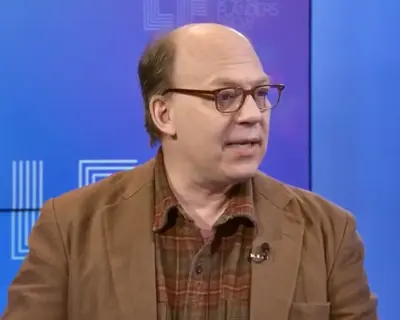
Greg Grandin (born 1962) is a professor of history at Yale University. He previously taught at New York University. He is author of a number of books, including Fordlândia: The Rise and Fall of Henry Ford's Forgotten Jungle City, which was a finalist for the Pulitzer Prize for History, as well as for the National Book Award and a National Book Critics Circle Award. A more recent book, entitled, Who Is Rigoberta Menchú?, focuses on the treatment of the Guatemalan Nobel Peace Prize winner. His 2014 book, The Empire of Necessity: Slavery, Freedom, and Deception in the New World, is a study of the factual basis for the novella Benito Cereno by Herman Melville.
