Andrew Jackson Quotes
The laws of the United States must be executed. I have no discretionary power on this subject; my duty is emphatically pronounced in the Constitution.
Andrew Jackson, 1767-1845, 7th President of the United States (Democrat, TN), Proclamation to the People of South Carolina, December 10, 1832
Sourced by: Eigen's Political and Historical Quotations


One of the conundrums of our constitutional system is who has the last word as to what the Constitution means. Essentially it is the judicial branch headed by the Supreme Court. But there are those who believe that the current popular majority should have a say in what is or is not constitutional. If so the legislative branch should have the last word. Still others say that the President is the only person elected by ALL the people, so his opinion most reflects the will of the public. And then there are most who argue that the Constitutional system was created just to avoid the power of currently popular majorities, and the courts should decide based on the Constitution itself. So the statement has very little meaning except that Phillips thinks that the courts have too much power. Whoever gets to decide what is or is not Constitutional will be accused of being “over” the Constitution by those who don’t like the decisions. In our system, that is the courts.


He had been specifically asked about the Federal Affordable Care Act—Obamacare, which he had opposed when it was debated.

The Civil Rights Act of 1964 There was a major backlash in the South against the Civil Rights Act of 1964. Johnson, a Southerner himself, went right after the protesters.


The president was asked if he supported the Supreme court's school desegregation decision:


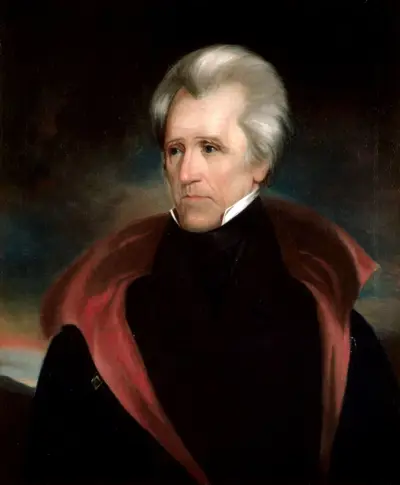
Andrew Jackson was an American lawyer, soldier, and statesman who served as the seventh president of the United States from 1829 to 1837. Before being elected to the presidency, Jackson gained fame as a general in the United States Army and served in both houses of the U.S. Congress. An expansionist president, Jackson sought to advance the rights of the "common man" against a "corrupt aristocracy" and to preserve the Union.
